:quality(80) "header-bed-to-bed")
:quality(80) "patient-wearing-medical-face-oxygen-1200x800")
When a patient cannot breathe without mechanical support, transport becomes a critical medical decision, not a simple travel arrangement. Families may need to move a loved one to another hospital, another country, or back home, while ensuring that breathing support continues without interruption. For ventilated patients, the safest solution is usually a specialized air ambulance with ICU-level care onboard. MTI 24/7 coordinates these complex ventilator transfers worldwide, from the patient’s hospital bed to the receiving medical unit.
Key points to remember about ventilator air ambulance transport
Ventilated patients often require specialized air ambulance transport because commercial flights cannot provide continuous ICU-level respiratory support safely.
Air ambulances operate as flying intensive care units with ventilators, oxygen systems, monitoring equipment, and experienced critical care flight teams onboard.
Safe ventilator transport depends on advanced medical planning, continuous monitoring, and rapid management of respiratory or cardiac complications during flight.
What is a ventilated patient?
A ventilated patient is someone who needs a mechanical ventilator to support or control breathing. This may be because the lungs cannot take in enough oxygen, the body cannot remove carbon dioxide properly, or the brain and muscles cannot maintain safe breathing independently.
Patients may require ventilation after:
Major trauma, surgery, cardiac emergencies, or intensive care treatment.
Severe respiratory infections, such as pneumonia, COVID-19 complications, sepsis-related lung failure, or acute respiratory distress syndrome.
Chronic respiratory diseases, such as COPD, pulmonary fibrosis, cystic fibrosis, advanced asthma complications, or chronic respiratory failure.
Neurological disorders, such as stroke, traumatic brain injury, spinal cord injury, Guillain-Barré syndrome, motor neurone disease, or advanced neuromuscular weakness.
Because breathing support is continuous, ventilated patient transport requires specialist equipment, trained critical care teams, and careful planning before, during, and after the flight.
Can ventilated patients fly on commercial flights?
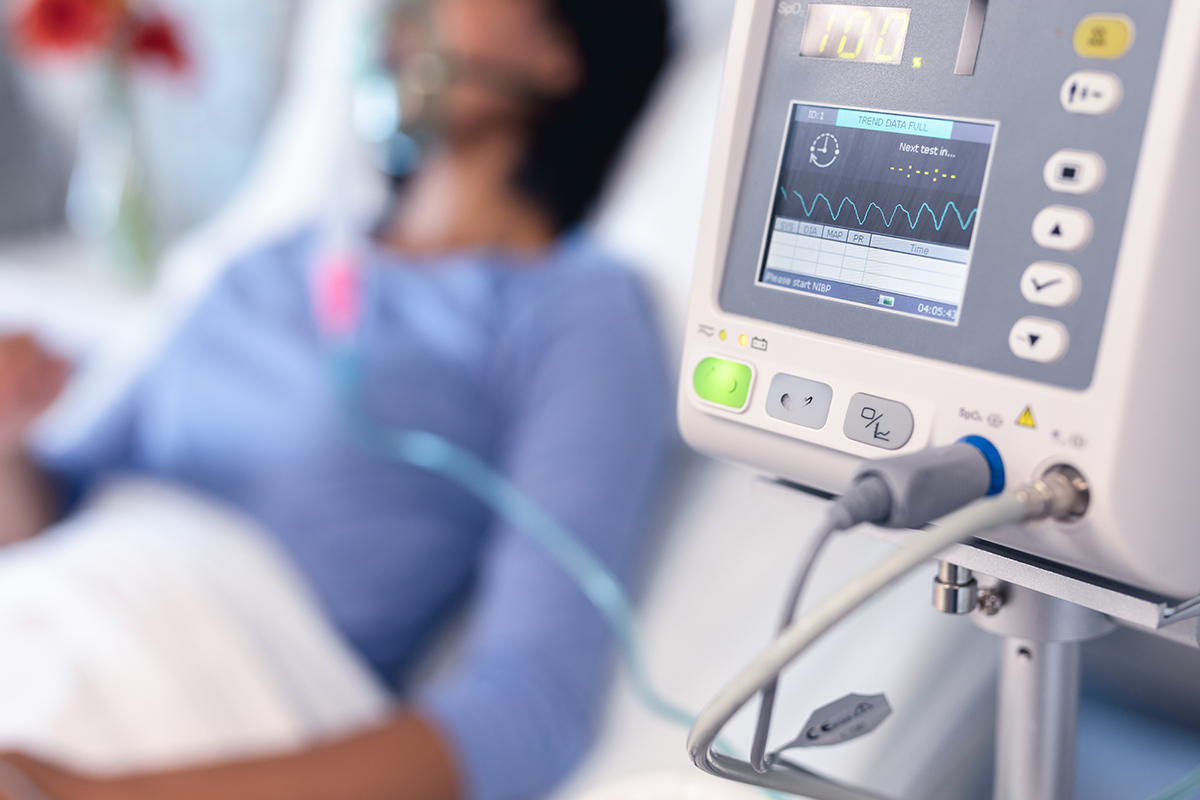
In most cases, fully ventilated patients cannot safely travel on standard commercial flights, even with a medical escort.
Commercial aircraft are not designed to function as intensive care environments. Space is limited, access to the patient is restricted, electrical power may be insufficient for advanced equipment, and medical teams cannot easily perform emergency airway interventions in a passenger cabin.
The main risks include:
Oxygen levels dropping during flight.
Difficulty accessing the airway quickly.
Breathing tube movement or blockage.
Sudden cardiac or respiratory instability.
Ventilator disconnection or malfunction.
Delays if an emergency diversion is needed.
Limited space for equipment and medical staff.
These limitations are significant because ventilated patients may deteriorate quickly. A few minutes of interrupted breathing support can become dangerous, especially for patients who are sedated, unstable, or highly oxygen-dependent.
Can ventilators be used on planes? Size, flight restrictions, and safety risks
Hospital ventilators are often large machines, but transport ventilators are smaller, portable devices designed for ambulance and aeromedical use.
However, “portable” does not mean simple. A ventilator still requires:
Oxygen supply.
Backup batteries.
Reliable power supply.
Alarms and monitoring.
Tubing and airway connections.
Trained staff to adjust settings safely.
Some ventilators may be approved for transport, but commercial airline approval is complex and not guaranteed. Airlines may restrict certain devices because of battery rules, oxygen limitations, cabin safety regulations, or lack of space.
Moreover, a mechanical ventilator usually cannot simply be replaced by an oxygen bottle, even for a short time. Oxygen provides oxygen into the airway, but it does not actively move air in and out of the lungs. If the patient cannot breathe effectively without mechanical assistance, oxygen alone may not remove carbon dioxide or maintain safe ventilation.
Best medical flight option for ventilated patients

For most ventilated ICU patients, the safest transport option is a dedicated air ambulance.
MTI 24/7’s air ambulance coordination provides access to medically configured aircraft prepared around the patient’s condition. They are organized as mobile critical care environments, allowing ventilation, monitoring, medication, oxygen therapy, and emergency intervention to continue throughout the journey.
MTI 24/7 coordinates domestic and international air ambulance transport for ventilated patients, delivering ICU-level care during medical repatriation, medical evacuation, and complex hospital-to-hospital critical care transfers.
What happens inside an air ambulance for ventilated patients?
Inside our medical jets for ventilated patients, the environment is organized like a compact intensive care unit designed specifically for aeromedical transport.
The patient remains secured on a specialized medical stretcher while connected continuously to life-support systems throughout the flight. Around the patient, our medical team works within a carefully structured critical care space where medications, monitoring systems, and emergency tools remain readily accessible.
Unlike a standard aircraft cabin, the onboard setup is designed to allow uninterrupted ICU-level treatment during take-off, cruising altitude, turbulence, and landing.
Lighting, equipment positioning, oxygen access, and patient monitoring are all arranged to support rapid medical intervention if the patient’s condition changes during the journey.
Throughout the flight, the objective is not simply transportation. It is to maintain continuous critical care safely from one medical facility to another while minimizing respiratory and cardiovascular stress associated with air travel.
Medical equipment used during ventilator air transport
Ventilator air transport requires specialized portable intensive care equipment adapted for aviation conditions and long-distance critical care transfers.
Transport ventilator
The transport ventilator maintains breathing support throughout the journey by delivering controlled airflow, oxygen concentration, and pressure settings according to the patient’s respiratory needs.
Unlike standard hospital ventilators, transport ventilators are specifically designed to function safely during altitude and cabin pressure changes.
Oxygen delivery systems
Ventilated patients may consume large amounts of oxygen during long-haul transfers. Dedicated onboard oxygen systems ensure continuous respiratory support throughout the flight, including reserve capacity for delays or emergencies.
Cardiac monitor
Continuous monitoring allows the medical team to detect early signs of respiratory or cardiovascular deterioration before they become clinically severe.
Parameters commonly monitored include:
Heart rhythm
Blood pressure
Respiratory rate
Oxygen saturation
Infusion pumps
Infusion pumps deliver medications with precision during transport. These may include sedation, pain relief, blood pressure support, antibiotics, or emergency medications depending on the patient’s condition.
Suction equipment
Ventilated patients may be unable to clear secretions independently. Suction systems help keep the airway clear and reduce the risk of obstruction or breathing complications.
Backup power and emergency equipment
Backup batteries, reserve oxygen supplies, and emergency airway equipment help reduce risk in case of equipment malfunction or sudden clinical deterioration during flight.
How does our medical flight crew keep ventilated patients safe

Ventilated patient transport requires more than medical supervision. It requires continuous critical care decision-making in an aviation environment where physiological conditions can change rapidly.
Before departure, our flight medical team reviews the patient’s respiratory stability, ventilator dependency, oxygen requirements, medications, recent clinical condition, and potential in-flight risks.
During the flight, the crew continuously evaluates how the patient responds to:
Turbulence.
Positioning constraints.
Cabin altitude changes.
Long transport duration.
Reduced atmospheric pressure.
Oxygen consumption variations.
Our team remains prepared to respond immediately to respiratory instability, airway complications, cardiovascular deterioration, or equipment-related emergencies.
This proactive approach is particularly important for critically ill ventilated patients because even small clinical changes can escalate quickly during air transport.
The crew’s role is therefore not only to accompany the patient, but to preserve ICU-level stability throughout the entire journey until handover at the receiving medical facility.
Get a quote for ventilated patient air ambulance transport
Transporting a ventilated patient requires proper coordination, specialist medical planning, and the right aircraft configuration. MTI 24/7 supports patients and families with worldwide air ambulance coordination for ventilated patients. Our team can organize medical flight planning, ICU handovers, ground ambulances, airport logistics, flight medical crews, and bed-to-bed transport management.
Contact MTI 24/7 to request a personalized quote for safe, efficient, and medically supervised ventilated patient transport.