:quality(80) "header-bed-to-bed")
:quality(80) "Chest x-ray")
A broken rib can make every breath, cough, and movement painful. So, when flying becomes necessary, the real question is not only whether you can fly, but whether you can travel without increasing pain, breathing difficulty, or medical risk. With the right assessment and support, some patients can fly safely. MTI 24/7 coordinates medical escorts, air ambulances, and bed-to-bed transport for patients with rib injuries worldwide.
Key points to remember before flying with broken ribs:
Flying with broken ribs may be safe for stable patients without breathing complications, but medical assessment is strongly recommended before travel.
Patients with lung injuries, severe pain, low oxygen levels, or unstable chest trauma may require a medical escort or air ambulance.
MTI 24/7 coordinates bed-to-bed medical transport worldwide, including airline clearance, medical escorts, air ambulances, and airport assistance.
Can you fly with broken ribs?
Yes, you may be able to fly with broken ribs if the fracture is stable, your breathing is normal, your pain is controlled, and there are no complications such as lung injury.
However, flying is not always safe after a rib fracture. You should always seek medical advice before travelling, especially if the injury is recent, painful, or linked to a fall, road accident, surgery, or chest trauma.
Flying with broken ribs may be possible when:
Your oxygen levels are stable
You do not have a collapsed lung.
You do not need urgent hospital care.
Your doctor confirms you are fit to fly.
You can sit upright for the full journey.
You can breathe deeply without severe pain.
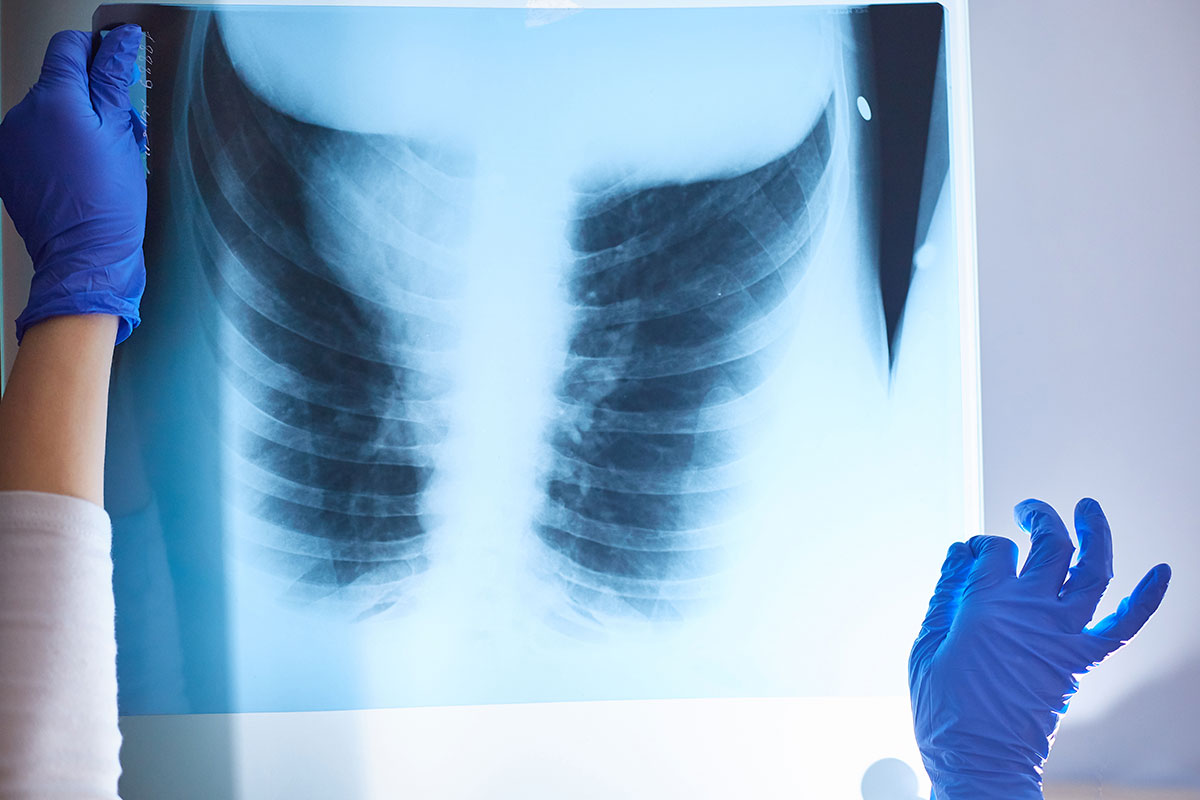
Flying may be unsafe if broken ribs are associated with complications such as:
Pneumothorax, also called a collapsed lung.
Hemothorax, when blood collects around the lung.
Pulmonary contusion, which means bruising of the lung tissue.
Flail chest, when several ribs are broken and the chest wall becomes unstable.
Do airlines allow you to fly with broken ribs?
Airlines may allow passengers with broken ribs to fly, but they may request medical clearance if there is any concern about safety during the journey.
Medical clearance is a formal approval process used by airlines to confirm that a passenger is medically stable enough to fly. It usually involves a form completed by the treating doctor, sometimes called a MEDIF form.
Airlines may request medical clearance if:
A stretcher is required.
The rib injury is recent.
The passenger cannot sit upright.
The patient was recently hospitalized.
The passenger has breathing difficulty.
Oxygen may be needed during the flight.
There is a risk of deterioration during travel.
This process is important because airline cabins have lower oxygen pressure than ground level. For most healthy passengers, this is not a problem. For patients with chest trauma or respiratory problems, it can become more serious.
What are the risks of flying with broken ribs?
The main risks of flying with broken ribs are pain, reduced breathing capacity, and complications related to lung injury.
Rib fractures hurt because the ribs move every time you breathe. During a flight, prolonged sitting, cabin pressure changes, turbulence, and limited mobility can make symptoms worse.
Possible risks include:
Difficulty coughing: If coughing is too painful, mucus can build up in the lungs.
Increased pain: Sitting upright for several hours can put pressure on the chest wall.
Reduced mobility: Airport walking, stairs, boarding, and luggage handling may become unsafe.
Shallow breathing: Pain may prevent deep breathing, which can increase the risk of chest infection.
Worsening shortness of breath: Lower cabin oxygen levels may affect patients with lung complications.
Medical deterioration: Patients with pneumothorax, hemothorax, or lung bruising may worsen during travel.
These risks are higher after major trauma, multiple rib fractures, recent hospitalization, or long-haul flights.
How to fly safely with broken ribs

If your doctor confirms that you are fit to fly, preparation can make the journey safer and more comfortable.
Useful travel tips include:
Stay hydrated during the flight.
Avoid tight clothing around the chest.
Avoid carrying, lifting, or pulling luggage.
Avoid sleeping in positions that twist the chest.
Ask your doctor for written fitness-to-fly confirmation.
Choose an aisle seat if you need easier access to move.
Arrange help at both airports, not only during the flight.
Keep important medical documents in your hand luggage.
Walk gently when medically appropriate during long journeys.
Take prescribed pain medication before pain becomes severe.
Request wheelchair assistance at departure, transit, and arrival.
Use a small pillow to support your ribs when coughing or moving.
The goal is not only pain relief. It is to protect breathing, reduce physical strain, prevent exhaustion, and avoid avoidable complications during the journey.
Medical escort for flying with broken ribs
MTI 24/7’s medical escort service allows medically stable patients to travel on commercial flights with professional healthcare support.
A medical escort may be a nurse, paramedic, or doctor depending on the patient’s condition. The air medical escort accompanies the patient throughout the journey and helps manage medical, mobility, and logistical needs from departure to arrival.
A medical escort may be necessary when:
The patient has limited mobility.
Oxygen monitoring may be required.
Pain or fatigue may affect the journey.
The flight is long-haul or includes transit.
Medication support is needed during travel.
The patient is stable but cannot travel alone.
The patient was recently discharged from hospital.
Family members need professional support during travel.
During the airport journey, our medical escort can help with:
Check-in coordination.
Wheelchair assistance.
Medical documentation.
Transfer between terminals.
Security and boarding support.
Communication with airport staff.
Reducing unnecessary walking and physical effort.
During the flight, our healthcare professionals may assist with:
Medication timing.
Monitoring symptoms.
Hydration and comfort.
Mobility during the flight.
Supporting safe positioning.
Oxygen coordination when approved.
Early recognition of concerning symptoms.
This service is especially useful for patients who do not need an air ambulance but still require structured medical supervision to travel safely.
Air ambulance for severe broken ribs and chest trauma
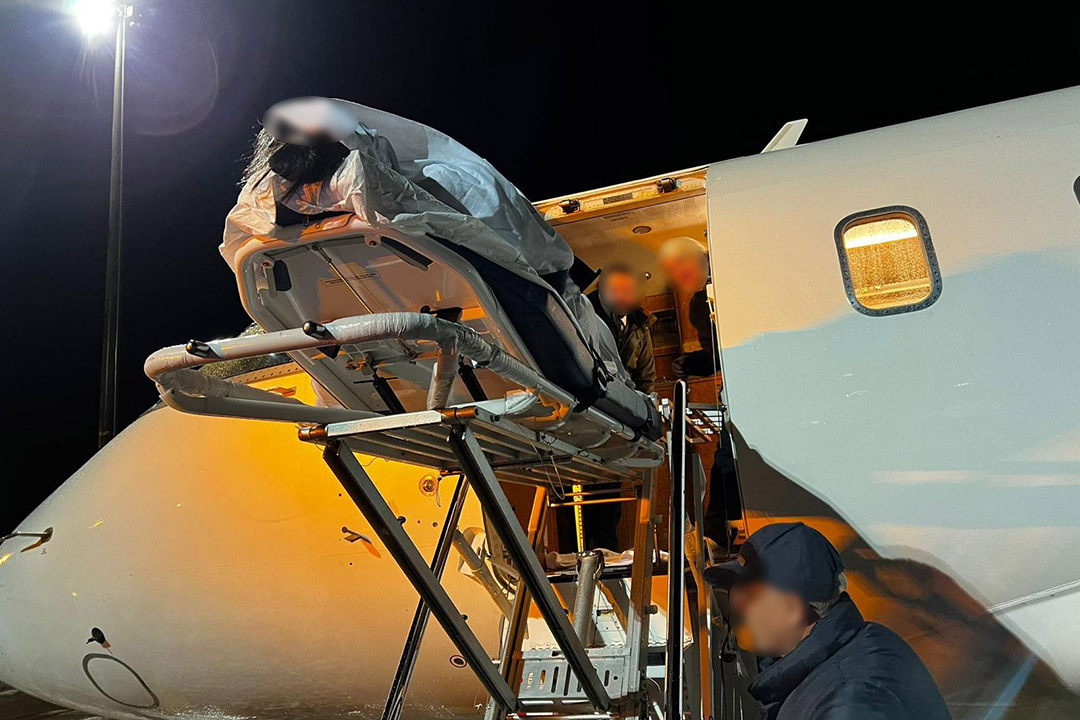
MTI 24/7 also coordinates air ambulance transport for patients who cannot safely travel on a standard commercial flight.
An air ambulance is a medically equipped aircraft designed to transport patients who need continuous medical care during the journey. It may be required when broken ribs are part of a more serious chest trauma or when the patient cannot remain safely seated.
An air ambulance may be necessary when:
Oxygen levels are unstable.
The patient cannot sit upright.
Intensive monitoring is required.
Ventilator support may be needed.
Pain is severe and difficult to control.
The patient has multiple rib fractures.
There is a high risk of in-flight deterioration.
There is a collapsed lung or recent chest drain.
Air ambulance benefits include:
Continuous monitoring.
Ability to travel lying down.
Specialist medical crew onboard.
A controlled medical environment.
Faster routing when medically appropriate.
Medical equipment adapted to the patient’s condition.
Reduced physical stress compared with commercial travel.
For serious rib fractures, chest trauma, or respiratory complications, an air ambulance can provide the safest alternative to commercial flight.
How MTI 24/7 coordinates medical transport for patients with broken ribs
Our teams follow a structured step-by-step process to organize safe medical transport based on the patient’s condition, destination, and travel risks.
1. Medical situation review
The process begins with a review of the patient’s medical condition.
This may include:
Diagnosis.
Pain level.
Mobility level.
Oxygen needs.
Hospital reports.
Breathing status.
Current medications.
Recent scans or X-rays.
Number of fractured ribs.
Departure and arrival locations.
This helps determine whether the patient may travel with a medical escort or requires an air ambulance.
2. Risk assessment and transport recommendation
We then assess the safest travel option according to the patient’s medical stability.
The recommendation may include:
Private air ambulance.
Ground ambulance transfers.
Stretcher on a commercial aircraft.
Commercial flight with medical escort.
Commercial flight with oxygen coordination.
The aim is always to match the level of care to the patient’s actual medical needs.
3. Airline, airport, and medical coordination
Once the transport option is confirmed, we coordinate the operational details.
This may include:
Airport assistance.
Oxygen arrangements.
Air ambulance planning.
Hospital communication.
Airline medical clearance.
Medical escort assignment.
Ground ambulance booking.
This reduces the burden on families and helps prevent delays or last-minute complications.
4. bed-to-bed patient transfer
On the day of travel, the patient journey is managed from the departure location to the final destination.
Depending on the case, this may include:
Arrival airport assistance.
Ground ambulance transfer to the airport.
Medical support during check-in and boarding.
Collection from hospital, clinic, hotel, or home.
Transfer to the receiving hospital, rehabilitation center, or home.
The objective is continuity of care from start to finish.
5. Arrival and handover
At destination, the patient is transferred safely to the receiving team or family.
When required, MTI 24/7 can coordinate handover with:
Hospitals.
Nursing teams.
Private doctors.
Family members.
Insurance providers.
Rehabilitation centers.
This ensures the journey does not end at the airport, but at the patient’s actual place of care.
Contact MTI 24/7 for safe medical transport with broken ribs

If you or a loved one needs to fly with broken ribs, the safest option depends on medical stability, breathing function, pain control, flight duration, and the risk of complications. MTI 24/7 coordinates medical escorts, air ambulances, and bed-to-bed transport worldwide. Our team helps patients and families organize the right level of medical support for safe and carefully managed travel.
Reach us by: