:quality(80) "header-bed-to-bed")
:quality(80) "ICU Transfer Belgium")
What to remember about ICU transfers to and from Belgium:
An ICU transfer is the medically supervised movement of a seriously ill or injured patient, with continuous care delivered from the moment they leave their hospital bed to the moment they arrive at the receiving facility.
The right transport solution, dedicated air ambulance, medical escort, or ground ambulance, is always determined by the patient's clinical condition and the distance involved, never by preference alone.
MTI 24/7 manages every aspect of the transfer, from clinical assessment and crew mobilisation to hospital coordination and regulatory clearances, 24 hours a day, worldwide.
Intro: When someone you care about is in intensive care, the idea of moving them across a city, let alone across a continent, can feel overwhelming. Yet for thousands of families and medical teams each year, arranging an ICU transfer to or from Belgium is not a worst-case scenario. It is simply the next necessary step in the patient's treatment journey. Done well, it is seamless. Done poorly, it carries real clinical risk. MTI 24/7 makes sure it is done right, coordinating every medical, logistical, and documentary detail, around the clock, anywhere in the world.
What is an ICU transfer?
An ICU transfer, also referred to as a critical care transport or intensive care patient transfer, is the medically supervised movement of a seriously ill or injured patient who requires continuous monitoring, active treatment, or life-support during transit.
From departure to arrival, the level of care continues without interruption, delivered by a specialist medical team using equipment calibrated for the patient's exact clinical needs, aboard a transport solution chosen to match both their condition and the distance involved.
Transfers can take place between two hospitals within Belgium or between a Belgian facility and a specialist center abroad, as part of a medical repatriation, returning a patient to their home country for ongoing treatment or recovery, or a medical evacuation, moving a Belgian citizen to a facility where a higher level of care is available.
The patient's condition, the distance, and the urgency of the situation together determine how the transfer is organized and which transport method is selected.
When is an ICU transfer to or from Belgium necessary?
No two ICU transfers are triggered by the same situation. Some are planned transitions from acute care to a specialist center; others arise from a sudden deterioration that demands swift action.
The most common scenarios include:
Sepsis or septic shock requiring ongoing vasopressor support and intensive monitoring throughout the transfer.
Multi-organ dysfunction demanding a level of simultaneous systemic support that exceeds the current hospital's ICU capacity.
Cardiac arrest, acute myocardial infarction, or severe arrhythmia requiring cardiothoracic surgery or advanced cardiac critical care.
Stroke or intracranial hemorrhage requiring neurosurgical intervention or specialist stroke unit care unavailable at the treating facility.
Traumatic brain injury requiring neurocritical care, intracranial pressure monitoring, or specialist rehabilitation following stabilization.
Respiratory problems requiring continuous mechanical ventilation during transfer to a facility offering advanced pulmonary or intensive care.
Premature birth or neonatal emergencies requiring urgent transfer to a neonatal intensive care unit equipped for high-dependency infant care.
Advanced heart failure or post-cardiac surgery recovery requiring transfer between specialist cardiac centers for escalated treatment or long-term management.
Major trauma, including polytrauma, spinal cord injury, or severe orthopedic fractures, stabilized and requiring repatriation for long-term rehabilitation or reconstructive care.
How quickly can an ICU transfer from Belgium be organized?
Speed is one of the first concerns families and medical teams raise, and rightly so. The honest answer depends on the patient's clinical stability, the transport solution selected, and the operational constraints specific to each mission. MTI 24/7 begins working from the moment of first contact; documentation is gathered in parallel, never used as a reason to delay.
No ICU transfer can be safely mobilized in under 48 hours. That minimum exists to protect the patient; it allows the medical crew to be properly briefed, the right equipment prepared, and both hospitals coordinated without cutting corners. Within that window, MTI 24/7 compresses every step that can run simultaneously.
In genuinely urgent situations, that timeline can be reduced, typically by pre-positioning a medical crew closer to the departure point, prioritizing aircraft availability, and activating hospital coordination before all documentation is finalized, accepting and managing the residual risk under direct medical supervision.
Throughout, the coordination team reviews the clinical file, liaises with both hospitals, and prepares equipment all at the same time. Nothing that can run in parallel is ever sequenced.

Air ambulance, medical escort, or ground ambulance: Choosing the right ICU transport from Belgium
Selecting a transport method is a clinical decision made by weighing the patient's current condition, the level of medical support they need in motion, and the distance between the two hospitals.
Dedicated air ambulance: When the Patient Cannot Leave the ICU behind
Picture a patient on mechanical ventilation, sedated, with an arterial line, two infusion pumps running vasopressors, and a chest drain in place. Moving them means bringing every one of those systems with them, recalibrated, secured, and actively managed throughout the flight.
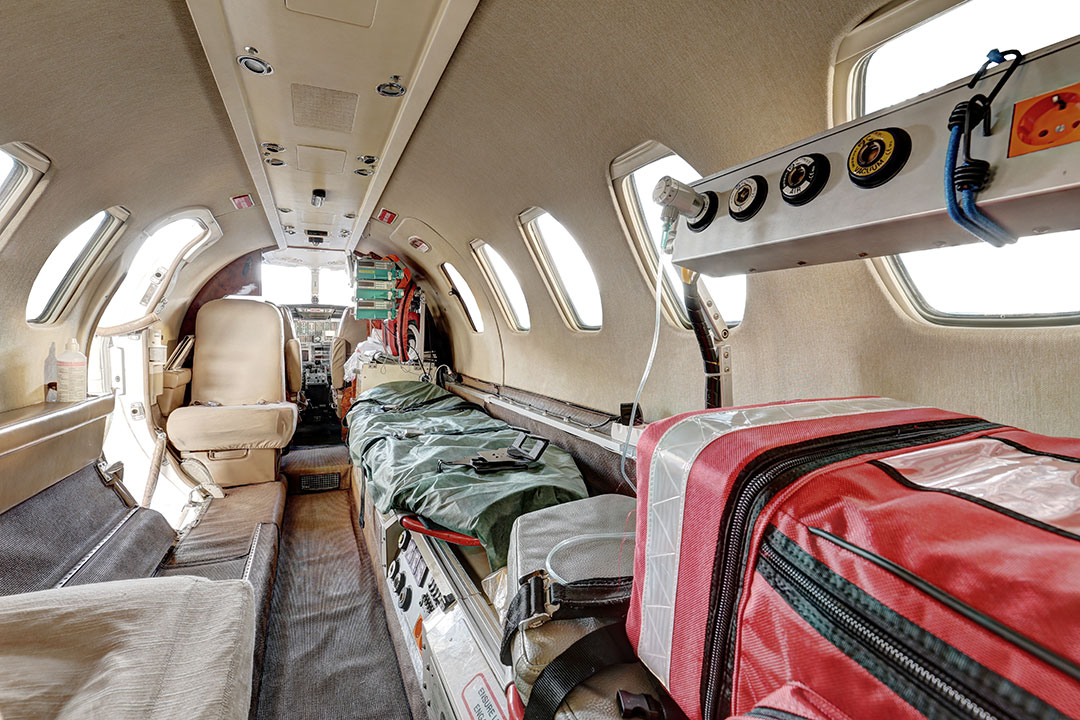
That is precisely what a dedicated air ambulance is built for. The aircraft cabin is configured as an airborne ICU: the transport ventilator runs the same modes as the hospital unit, the monitoring screens show the same continuous parameters, and the infusion pumps deliver the same medications at the same rates. Nothing is paused. Nothing is approximated. The intensive care medical team on board manages every clinical variable from wheels-up to touchdown, exactly as they would on a hospital ward round.
Dedicated air ambulances fly direct, point-to-point routes; no commercial terminals, no boarding queues, no transfers. Belgium's network of international and regional airports, Brussels-Zaventem, Charleroi, Liège, Antwerp, and Ostend, provides considerable routing flexibility, keeping ground transfer times between aircraft and hospital to a minimum.
MTI 24/7 coordinates long-distance air ambulance missions from Belgium to destinations including the United Kingdom, the United States, Canada, the Middle East, Sub-Saharan Africa, Southeast Asia, and Australia.
Medical escort on a commercial flight: When the patient has left the ICU but still needs a clinician beside them
Imagine a patient who spent two weeks on a ventilator following a stroke, now breathing independently, sitting up, taking oral medications, but still requiring oxygen, neurological observation, and careful management of a central line during a six-hour flight home.
A commercial medical escort is a doctor, nurse, or paramedic, flying with that patient from the moment they leave the hospital bed to the moment they arrive at the receiving facility. On board, they monitor vital signs, administer medications, manage oxygen flow, and respond to any change in condition, while the rest of the cabin continues its journey entirely unaware.
Depending on the patient's mobility and clinical needs, they travel in a business class seat, a reclined economy seat with additional space, or a stretcher configuration spanning a block of seats, allowing the patient to lie flat for longer flights.
This solution is well suited to patients who are post-ICU, recovering from surgery, or living with a stable condition that requires continuous professional oversight rather than active intensive intervention.
Ground ambulance: When the fastest route is the road
Visualize a patient being discharged from the ICU at UZ Leuven, ready to be transferred to a specialist rehabilitation center in the Netherlands. Organizing a flight, with airport transfer, check-in procedures, loading, transit, unloading, ground connection at the other end, would add hours and unnecessary physical stress to a patient who is fragile but stable.
A direct road transfer in a fully equipped ground ambulance, staffed by a clinical crew matched to the patient's needs, covers that distance without a single unnecessary handover or environmental change. For transfers within Belgium or to bordering countries, namely France, the Netherlands, Luxembourg, and Germany, road transport frequently delivers the patient to their destination faster than any air alternative once all ground logistics are factored in.
MTI 24/7 coordinates ICU-configured road ambulances with onboard monitoring, ventilation capability where required, and infusion management. The patient remains under continuous clinical care from departure to arrival; on roads they may have travelled many times before.
Medical equipment used during an ICU-level patient transfer
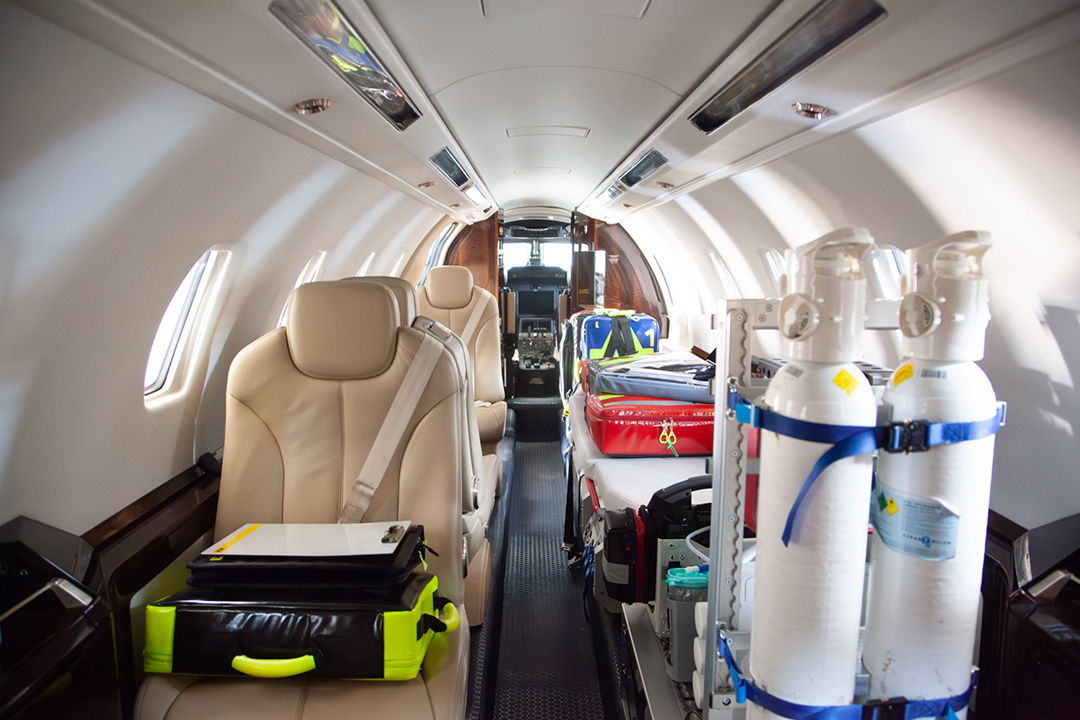
The equipment loaded onto any MTI 24/7 transfer is assembled specifically for each patient, based on their active diagnoses and ongoing treatments. Across critical care transfers, the equipment typically includes:
Portable defibrillator with pacing capability, with pre-charged pads applied where clinically indicated.
Airway management equipment including video laryngoscopy, surgical airway kits, and suction devices.
Oxygen supply calculated for the full transfer duration with a mandatory clinical safety margin, accounting for potential delays.
Point-of-care diagnostic capability where required; portable blood gas analyzers, glucometers, and portable ultrasound for select missions.
Multi-parameter monitoring covering continuous ECG, arterial oxygen saturation, invasive arterial blood pressure, capnography (end-tidal CO₂), and temperature.
Infusion pumps and syringe drivers for the uninterrupted delivery of sedation, analgesia, vasopressors, anticoagulants, antibiotics, or other time-sensitive medications.
Neonatal and pediatric transport incubators for premature or critically ill newborns and infants, maintaining a controlled thermal and respiratory environment throughout the journey.
Transport ventilators supporting the same modes as hospital ICU ventilators, volume control, pressure control, SIMV, CPAP/PSV, calibrated before departure and continuously adjusted during transit.
Every item is checked, adjusted, and confirmed operative before the team reaches the patient's bedside.
Factors that affect the cost of an ICU transfer to or from Belgium
Every ICU transfer is priced individually. MTI 24/7 does not apply fixed tariffs or publish standard rates, because no two missions carry the same clinical profile, distance, aircraft requirement, or crew composition. What is always guaranteed is a free, no-obligation quote provided promptly after the initial clinical assessment.
The variables that most directly shape the final cost include:
Urgency and mobilization window: urgent mobilizations involve different operational costs than planned transfers arranged over several days.
Distance and routing: longer missions require larger aircraft, greater fuel loads, extended crew hours, and often overnight layovers for the medical team.
Equipment and medications: patients on mechanical ventilation, vasopressor infusions, or renal replacement therapy require more complex configurations.
Medical crew composition: some patients require a physician on board; others can be safely transferred with a specialist nurse or paramedic. Each configuration carries different staffing costs.
Transport modality: a commercial flight with a medical escort or a ground ambulance transfer are more cost-effective than a private air ambulance; the right choice is always led by clinical need, not budget.
Many international health insurance policies, travel assistance schemes, and corporate medical plans cover part or all of ICU transfer costs. MTI 24/7 provides the required documentation to facilitate your pre-authorization and claims.
How an ICU transfer with MTI 24/7 works
MTI 24/7’s coordination process is built around a single principle: the patient's care never waits for the logistics to catch up. Everything moves simultaneously.
Assessment and recommendation: The coordination team collects the patient's medical summary, identifies the most appropriate transport solution, and provides a clear rationale and no-obligation quote.
Full coordination and mobilisation: The medical crew is briefed, the transport is prepared, and equipment is assembled, all at the same time. Both hospitals are coordinated, and all flight authorisations, and medical clearances are managed smoothly.
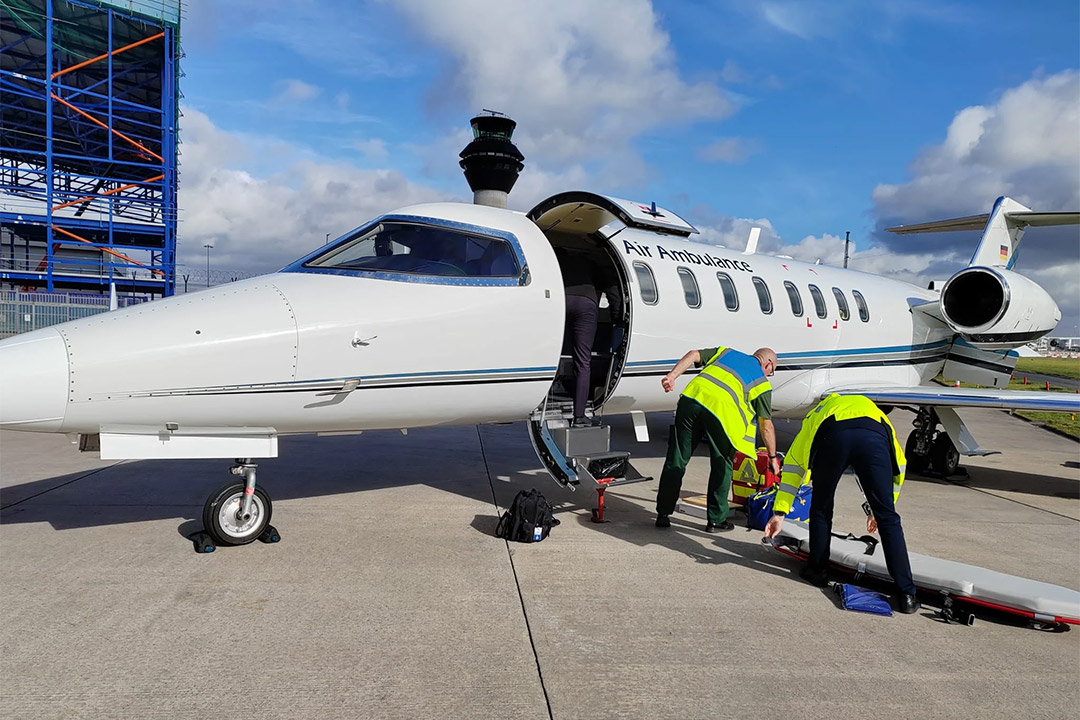
Bedside to bedside: The medical crew collects the patient directly from their ICU bed and delivers uninterrupted care through every stage of the journey. On arrival, a full clinical handover is made to the receiving team. The patient's care continues without a gap.
Families receive real-time updates throughout the mission.
Arrange your ICU transfer to or from Belgium with MTI 24/7
If a patient in your care needs to move, whether from a Belgian hospital to a specialist center abroad, or home to Belgium from anywhere in the world, MTI 24/7 is ready to coordinate the entire transfer. Request your free, no-obligation quote today. There is no commitment, no pressure, and no delay — only clear, expert coordination when it matters most.