:quality(80) "header-bed-to-bed")
:quality(80) "portugal")
Essential facts about medical evacuation in Portugal
Medical evacuation in Portugal may involve ICU-equipped air ambulances, medical escorts, or air ambulance helicopters depending on the patient’s medical stability and level of care required.
Evacuations from Lisbon, Porto, and Faro are generally more operationally accessible, while Madeira, the Azores, and remote Algarve areas often require more advanced logistical coordination.
A reliable air ambulance provider must combine critical care expertise, aviation logistics, hospital coordination, and 24/7 operational support to ensure safe continuity of care throughout the evacuation process.
Intro: A medical emergency in Portugal can change everything in a matter of minutes. One moment, life feels completely normal. The next, you are facing an ICU admission, a serious injury, emergency surgery, or the frightening reality that a patient can no longer travel safely without medical supervision. Families are suddenly confronted with urgent medical decisions, hospital coordination, transport logistics, and the challenge of moving a loved one safely to another hospital, rehabilitation center, or country for further treatment. In these situations, medical evacuation becomes far more than transportation. MTI 24/7 coordinates medevac flights from Portugal with calm, structured, 24/7 global support.

Medical emergencies in Portugal that may require medical evacuation
Medical emergencies do not always begin with dramatic events. Some happen violently and without warning. Others develop silently before suddenly becoming critical.
A patient may deteriorate after surgery, develop severe breathing difficulties overnight, suffer complications from infection, experience neurological symptoms, or see a chronic illness rapidly worsen within hours. In certain situations, delayed diagnosis, medical complications, or lack of access to highly specialized treatment may also intensify the situation and place the patient in a medically fragile condition.
Common medical emergencies requiring evacuation from Portugal include:
Severe burns, industrial accidents, and crush injuries
Stroke, seizures, and acute neurological emergencies
Internal bleeding and major post-surgical complications
Severe road traffic accidents with multiple traumatic injuries
Spinal cord injuries with paralysis or neurological impairment risks
Traumatic brain injuries, cranial bleeding, and serious head trauma
Cancer-related deterioration and medically complex oncology cases
Diving accidents, near-drowning incidents, and offshore emergencies
Ventilator-dependent patients needing advanced respiratory support
Respiratory failure, severe pneumonia, and oxygen-dependent conditions
Heart attacks, cardiac instability, and complex cardiovascular complications
Depending on the situation, patients may need transfer to another hospital in Portugal, or an international specialist center abroad.
When medical stability, continuity of care, and transport safety become critical concerns, professionally coordinated medical evacuation becomes an essential extension of the patient’s treatment pathway rather than simple transportation.
What happens after a medical emergency in Portugal?
After a serious medical emergency in Portugal, the priority is not to move the patient immediately. It is to understand what is happening, stabilize the condition, and decide what level of care is needed next.
Emergency care is provided first: The patient must first receive urgent medical attention where they are. This may involve emergency responders, first aid, oxygen, medication, pain control, bleeding management, or rapid transfer to a hospital in Portugal.
Doctors assess the severity of the condition: Once the patient reaches medical care, doctors evaluate the diagnosis and immediate risks. They may request scans, blood tests, cardiac monitoring, respiratory assessment, neurological evaluation, or surgical review depending on the symptoms and injuries.
The patient is stabilized before any evacuation is considered: Medical evacuation is only considered once the patient is stable enough to be moved with the right level of medical support. For critical patients, this may mean ICU admission, ventilation, oxygen therapy, medication infusions, immobilization, or continuous monitoring before the transfer plan is confirmed.
The next level of care is identified: Depending on the diagnosis, the patient may need surgery, intensive care, specialist treatment, rehabilitation, or follow-up care. In some cases, this care can continue locally in Portugal. In other cases, the patient may need to be transferred to another hospital, a specialist center, a rehabilitation facility, or another country.
The safest evacuation option is selected: The transport method depends on the patient’s condition. A stable patient may travel with a medical escort on a commercial flight. A critical patient may require an air ambulance with ICU-level equipment and a specialized medical team onboard.
The patient is transferred with medical supervision: Once everything is approved and coordinated, the patient is moved under medical supervision from their current location in Portugal to the receiving facility. The goal is to maintain continuity of care throughout the entire journey.
This is where medical evacuation from Portugal becomes essential: not as a rushed departure, but as a medically controlled process designed to move the patient safely when local care, specialist access, or long-term treatment needs require it.
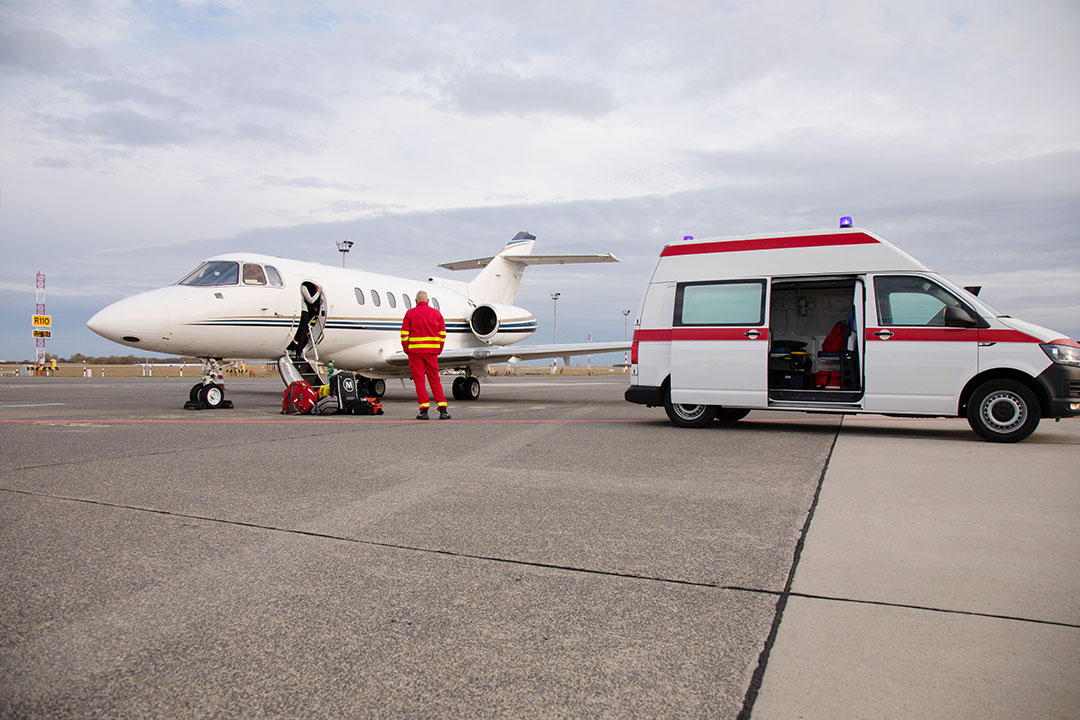
Air ambulance from Portugal: What it is, who needs it, and how it helps
For critically ill patients, leaving the hospital does not mean leaving intensive care behind.
Some patients are too unstable to sit upright for hours, wait in crowded terminals, or risk delays without medical supervision. Their condition may depend on cardiac monitoring, ventilator support, or continuous observation because even a small deterioration during the journey could become dangerous.
This is where an air ambulance changes the situation completely.
Unlike conventional travel, an air ambulance functions as a flying medical unit built around the patient’s condition. The aircraft can be configured with ICU-level equipment, advanced monitoring systems, ventilators, suction units, infusion pumps, emergency medication, specialized stretchers, and respiratory support systems adapted to the patient’s medical needs.
But the real difference is not only the aircraft. It is the medical environment created around the patient from departure to arrival.
The onboard team may include flight nurses, paramedics, or critical care doctors trained to manage medically fragile patients during the flight. Throughout the evacuation, they continuously monitor vital signs, manage symptoms, anticipate complications, and intervene promptly if the patient’s condition changes.
For families, one of the most difficult fears is the uncertainty of “what happens if something goes wrong during the journey?” Air ambulance evacuation is specifically designed to reduce that risk by maintaining medical continuity throughout the transfer instead of interrupting care between two hospitals.
From hospital discharge in Portugal to arrival at the receiving facility, the entire medical evacuation process is medically coordinated, supervised, and adapted to the patient’s level of dependency and clinical stability.
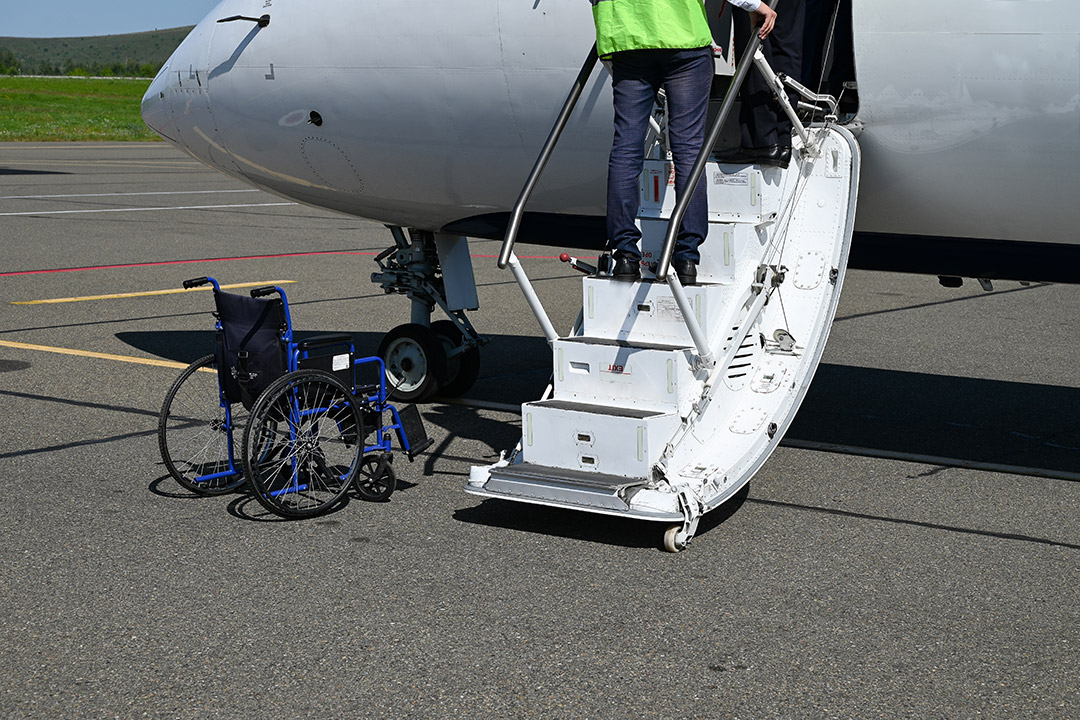
Medical escort on commercial flights from Portugal
A commercial medical escort is a safer and often more cost-effective option for patients who are stable enough to fly on a scheduled airline but still need medical support.
In this service, a qualified healthcare professional travels with the patient from Portugal to their destination. The air medical escort assists before boarding, during airport transit, throughout the flight, and until handover at arrival.
This option may be suitable for patients recovering from surgery, elderly travelers, people with limited mobility, stable fractures, controlled cardiac conditions, mild respiratory needs, or patients who feel too weak or medically vulnerable to travel alone.
The medical escort can help with medication timing, mobility, fatigue, oxygen coordination when approved by the airline, symptom monitoring, communication with airport teams, and practical reassurance during the journey.
For families, the benefit is simple: the patient is not travelling alone, and the journey is medically supervised from start to finish.
Medical evacuation from Portugal to other cities or international destinations
Medical evacuation from mainland Portugal is generally more straightforward from a logistical perspective because the country has several major international airports with broader aircraft access and stronger medical transport connectivity.
Cities such as Lisbon, Porto, and Faro are commonly used for domestic and international medical evacuation flights due to their larger airport infrastructure, international routing capabilities, and refueling access. These airports can accommodate a wider range of aircraft, including long-range fixed-wing air ambulances used for international repatriation.
Mainland evacuations may involve transfer between Portuguese cities or coordination of international flights to Europe, the United Kingdom, the Middle East, North America, Africa, or other destinations depending on the patient’s needs and flight range requirements.
Because airport access is generally easier on mainland Portugal, coordination is often faster and more flexible, particularly for long-distance medical flights requiring larger aircraft or complex international routing.
Medical evacuation from Madeira, the Azores, and Algarve coastal areas
Medical evacuation from Portugal’s islands and remote coastal regions presents a very different logistical challenge compared to evacuations from major mainland cities such as Lisbon or Porto.
In Madeira and the Azores, airport infrastructure is more limited, aircraft positioning can take longer, and weather conditions may significantly affect flight operations. These regions are geographically isolated from mainland Portugal, which means evacuation planning often requires additional coordination between hospitals, aviation providers, ground teams, and receiving facilities.
The Algarve can also present logistical difficulties, particularly in remote coastal zones, resort areas, offshore locations, or during peak tourist periods when roads, hospitals, and airport operations become more congested. In certain situations, patients located far from major airports or in difficult-access areas may first require transfer by medical helicopter before continuing onward evacuation.
Because of these operational realities, medical evacuation from Madeira, the Azores, or certain Algarve coastal areas often requires more advanced logistical planning than evacuations departing directly from Lisbon, Porto, or Faro.
Airports commonly used for medical evacuation flights in Portugal
The airport used for a medical evacuation flight is chosen according to far more than simple geographic proximity. Aircraft size, runway capabilities, international routing access, patient stability, ground transfer duration, weather conditions, and medical logistics all influence which airport is safest and most operationally suitable for the evacuation.
Common airports used for medevac flights in mainland Portugal and the islands include:
Faro Airport (FAO)
Lajes Airport – Azores (TER)
Santa Maria Airport – Azores (SMA)
Porto Santo Airport – Madeira (PXO)
Lisbon Humberto Delgado Airport (LIS)
Madeira Cristiano Ronaldo Airport (FNC)
Porto Francisco Sá Carneiro Airport (OPO)
João Paulo II Airport – Ponta Delgada, Azores (PDL)
Major mainland airports such as Lisbon, Porto, and Faro generally provide broader international connectivity, easier aircraft positioning, and access for larger fixed-wing air ambulances. Airports in Madeira and the Azores may involve more operational constraints due to island geography, runway limitations, weather exposure, and aircraft availability.

What makes a reliable air ambulance provider?
During a medical emergency, families are not only looking for an aircraft. They are looking for a provider capable of managing a medically complex situation safely, efficiently, and without operational mistakes. A reliable air ambulance provider must be able to coordinate medicine, aviation, logistics, communication, and international planning simultaneously while keeping the patient medically protected throughout the evacuation.
Key factors that define a reliable medical evacuation provider include:
Experienced critical care flight teams
Bed-to-bed medical transport planning
24/7 medical and operational coordination
International flight planning and airport coordination
Ability to adapt rapidly if the patient’s condition changes
Support for island, coastal, and remote-area evacuations
Experience with ventilated and medically fragile patients
Flexible aircraft solutions adapted to the patient’s condition
Access to ICU-equipped air ambulances and medical helicopters
Continuous medical supervision throughout the evacuation process
MTI 24/7 coordinates medical evacuations from Portugal by combining medical expertise, aviation logistics, and international coordination into one structured process. Every evacuation plan is adapted to the patient’s condition, level of dependency, destination, and operational constraints to ensure the safest possible continuity of care.
Request a medevac quote to or from Portugal
If you or a loved one needs medical evacuation from Portugal, MTI 24/7 can coordinate safe transport from Lisbon, Porto, Algarve, Madeira, the Azores, or other locations across the country. Whether the patient needs an air ambulance, a medical escort on a commercial flight, helicopter evacuation, or full bed-to-bed medical transport, contact our 24/7 coordination team.