:quality(80) "header-bed-to-bed")
:quality(80) "air-ambulance-exterior-16")
Key facts about medical transport planes:
Medical transport planes provide medically supervised long-distance and international patient transfers when standard air travel is unsuitable or unsafe.
Depending on the patient's condition, transport may be performed using a medical jet, medical helicopter, or commercial flight with a medical escort.
Aircraft, medical crews, and onboard equipment are adapted to each case to help maintain continuity of care throughout the journey.
A medical crisis far from home can escalate quickly. A child develops neurological complications during a family trip. A senior suffers respiratory failure overseas. A trauma patient survives emergency surgery abroad but is too unstable to return on a commercial flight. In these moments, families are suddenly confronted with distance, uncertainty, hospital coordination, and urgent medical decisions. Medical transport planes exist to safely bridge that gap, transforming complex international transfers into medically supervised journeys focused on stability, continuity of care, and patient protection from bedside to bedside. MTI 24/7 coordinates worldwide medical flights and international patient transfers 24/7.
What is a medical transport plane?
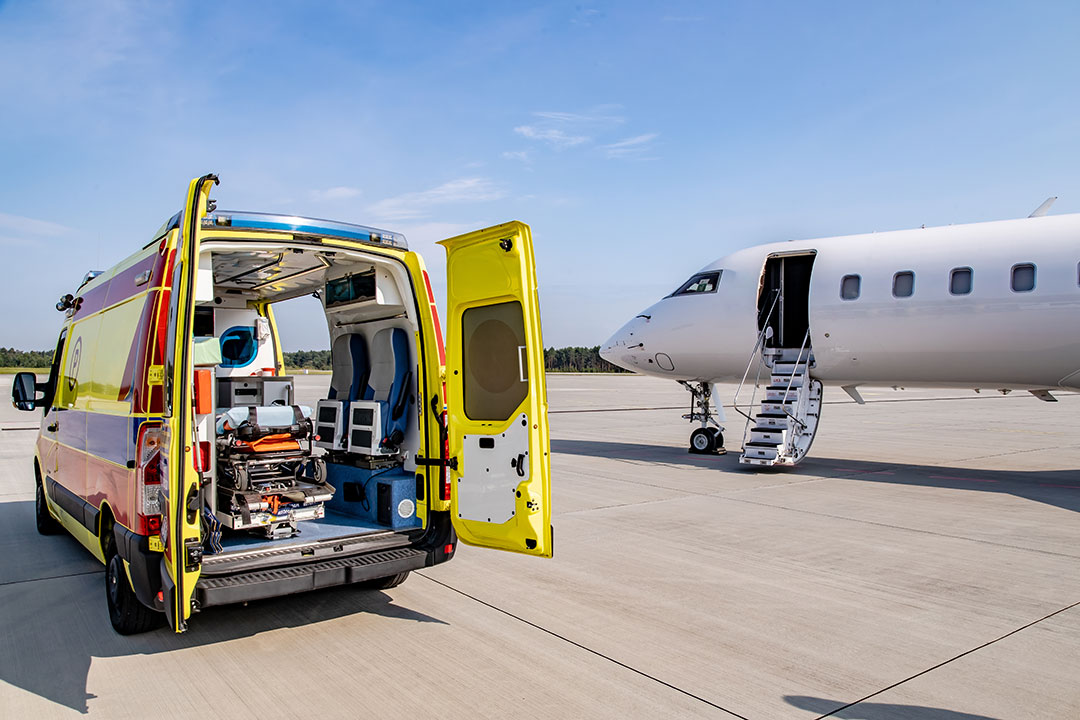
A medical transport plane, also known as a fixed-wing air ambulance or medical jet, is a specially configured aircraft designed to transport patients who require medical supervision or continuity of care during travel.
Unlike standard passenger aircraft, the cabin environment is organized around the patient’s medical condition, safety, comfort, and physiological tolerance to flight. These aircraft allow patients to travel safely when commercial air travel is medically inappropriate, logistically impossible, or excessively risky.
Fixed-wing air ambulances are primarily used for long-distance domestic transfers, international medical repatriation, and inter-hospital patient transport. One of their major advantages is their ability to perform long-range flights with greater stability and reduced physical strain compared to helicopters or complex commercial travel routes involving multiple airport transfers.
Many medical jets also provide a more controlled cabin environment, which may be particularly important for patients with:
thoracic trauma
neurological injuries
severe respiratory illness
post-surgical complications
conditions affected by cabin pressure changes
Some aircraft can additionally operate with sea-level or near-sea-level cabin pressurization, helping reduce the physiological effects of altitude on fragile patients who may not safely tolerate normal cabin pressure conditions.
Because these aircraft can cover large geographic distances rapidly while maintaining continuity of medical care, they play a central role in modern international medical transport systems.
How is a medical helicopter different from a medical transport plane?
A medical helicopter is a rotary-wing air ambulance designed for rapid short-distance patient transfer and efficient access to locations where fixed-wing aircraft cannot operate directly.
Unlike medical jets, air ambulance helicopters are not primarily intended for long international transport. While fixed-wing air ambulances focus on long-distance medical stability and international patient transfer, medical helicopters prioritize rapid transfers and local accessibility.
Their main advantage lies in their ability to land closer to:
highways
remote regions
offshore platforms
mountainous terrain
hospitals without airport infrastructure
For this reason, helicopters are commonly used for shorter emergency missions rather than intercontinental patient transport.

What is a commercial flight with a medical escort?
A commercial medical escort service is a medically supervised travel solution in which a healthcare professional accompanies a patient onboard a standard commercial airline flight.
Unlike a dedicated air ambulance, the aircraft itself is not medically configured. The patient travels on a regular passenger aircraft while the medical escort helps ensure safety, monitoring, assistance, and continuity of care throughout the journey.
Depending on the patient’s condition, travel may take place:
in business class or first class for greater comfort and reduced physical strain
or, in some approved cases, on an airline stretcher installed in the economy cabin
Commercial medical escort services are generally considered for patients who are medically stable enough to fly commercially but still require professional supervision or assistance during travel. This may include elderly travelers, patients recovering from surgery, individuals with reduced mobility, or stable cardiac and neurological patients requiring support during long international journeys.
For many patients, this solution provides a safer and more cost-effective alternative to a dedicated air ambulance while still ensuring professional medical oversight throughout the journey.

Commercial medical escort vs medical jets vs medical helicopters
Each medical transport option serves a different purpose depending on the patient’s condition, travel distance, and accessibility requirements.
Commercial medical escorts are typically used for stable patients travelling onboard scheduled airline flights with medical supervision and travel assistance throughout the journey.
Fixed-wing medical jets are designed for longer-distance transfers requiring a dedicated medical environment, particularly for patients unable to safely complete complex commercial travel routes.
Medical helicopters are primarily used for urgent short-range evacuation, especially in remote locations or areas inaccessible to fixed-wing aircraft.
In many complex medical repatriations/evacuations, different medical aircraft types work together. For example, a patient may first be transferred from a remote location by helicopter before continuing internationally onboard a fixed-wing air ambulance for long-distance transport and ongoing medical supervision.
When is an air ambulance needed?
An air ambulance becomes necessary when the journey itself starts posing a medical risk.
Some patients are stable inside a hospital room but may not safely tolerate crowded terminals, multiple airport transfers, long seated positioning, reduced cabin pressure, travel fatigue, or delays in accessing medical care during transit. In these situations, conventional travel arrangements may no longer be medically appropriate.
Dedicated medical flights are often used when a patient:
needs swift transfer over a long distance
must reach a specialist hospital unavailable locally
depends on oxygen or ongoing clinical supervision
cannot comfortably or safely remain seated during long travel
requires a controlled medical environment throughout transport
is too medically fragile for standard commercial flight procedures
This type of transport is frequently arranged after serious illness, major surgery, neurological events, severe infection, respiratory deterioration, traumatic injury, or complex hospitalization abroad. In some cases, the objective is reducing physical strain and preserving medical stability during a journey that would otherwise be excessively demanding for the patient.
When the patient remains medically stable under standard airline conditions, a commercial flight with a medical escort may sometimes offer a safer and more practical alternative than a dedicated air ambulance.
Medical equipment onboard a medical transport plane
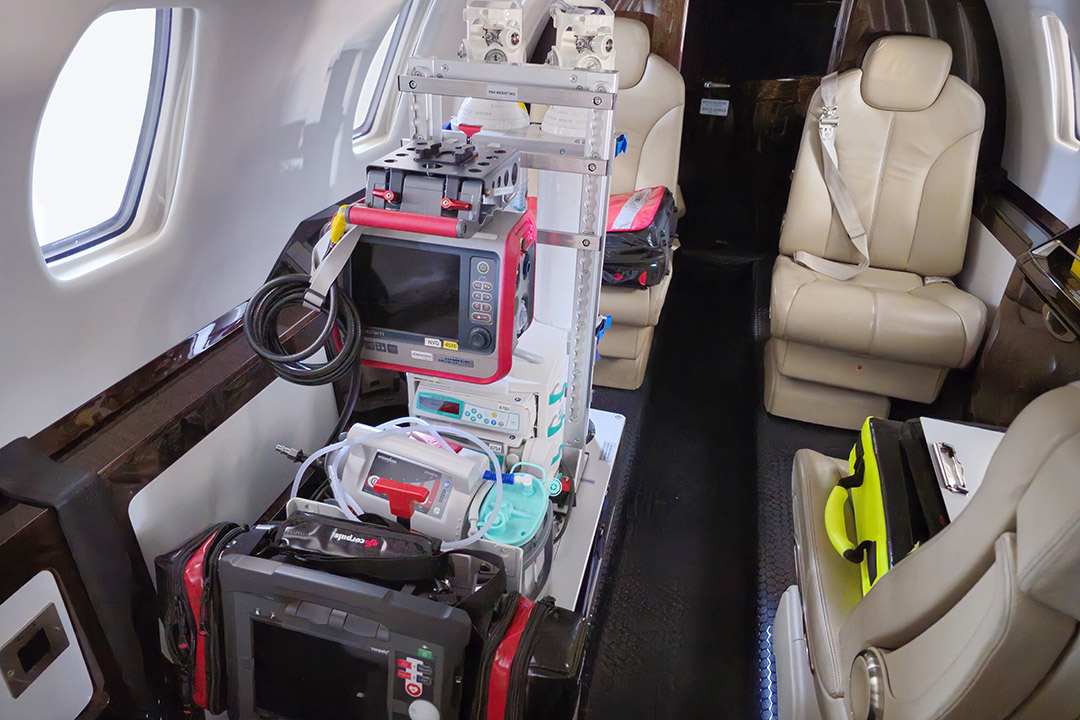
The medical equipment onboard an air ambulance aircraft is not standardized around the aircraft itself, but around the patient being transported. A patient recovering from orthopedic surgery will not require the same onboard setup as someone experiencing respiratory failure, neurological instability, or complex cardiac complications.
For this reason, the onboard medical environment is adapted according to the level of monitoring, respiratory support, and treatment continuity required during the journey.
Respiratory support during medical flights
Air travel can place additional strain on patients with compromised lung function or unstable breathing. Reduced cabin pressure, prolonged transport time, and physical fatigue may worsen respiratory distress in vulnerable patients.
Depending on the situation, our medical aircraft may therefore be equipped with:
transport ventilators
airway management equipment
advanced oxygen delivery systems
CPAP or BiPAP respiratory support
suction systems for airway clearance
These systems may be necessary for patients affected by severe pneumonia, respiratory failure, advanced COPD, chest trauma, neuromuscular conditions affecting breathing, or post-operative respiratory complications.
Continuous monitoring during patient transport
During long-distance medical transport, patient condition can evolve rapidly. Continuous monitoring helps our medical teams detect early signs of deterioration instead of waiting for visible clinical distress.
Medical transport aircraft may therefore include systems used to monitor:
heart rhythm
blood pressure
respiratory status
oxygen saturation
overall cardiovascular stability
This level of monitoring is particularly important during cardiac transfers, neurological transport, ICU repatriation, and medically complex post-surgical journeys.
Medication and treatment continuity during flight
For some patients, transport itself cannot interrupt ongoing treatment. Our medical aircraft may therefore include infusion and medication delivery systems allowing continued administration of:
sedation
antibiotics
intravenous fluids
pain management treatment
cardiovascular support medication
This helps maintain treatment continuity throughout the journey, particularly during long international transfers where interruption of care could compromise patient stability.
Who are the medical crew onboard?
The medical team onboard a medical transport aircraft is selected according to the patient’s condition, level of dependency, and potential risks during the journey. Again, a stable patient recovering from surgery will not require the same crew configuration as someone experiencing respiratory instability, neurological complications, or intensive care needs.
Depending on the complexity of the transfer, the onboard team may include flight physicians, critical care nurses, paramedics, respiratory therapists, or other specialized medical professionals adapted to the patient’s condition.
They are responsible for maintaining continuity of care throughout the transfer while continuously adapting to the challenges of air travel, including cabin pressure changes, long transport duration, patient fatigue, and the risk of in-flight deterioration.
During longer international missions, the medical crew helps transform the aircraft into a controlled medical environment where treatment, monitoring, patient positioning, symptom management, and overall stability can continue throughout the journey.
This level of coordination is particularly important during complex long-haul transfers where maintaining medical continuity over several hours becomes essential to patient safety.
Our bed-to-bed medical transport service
Medical transport does not begin at the airport and does not end when the aircraft lands.
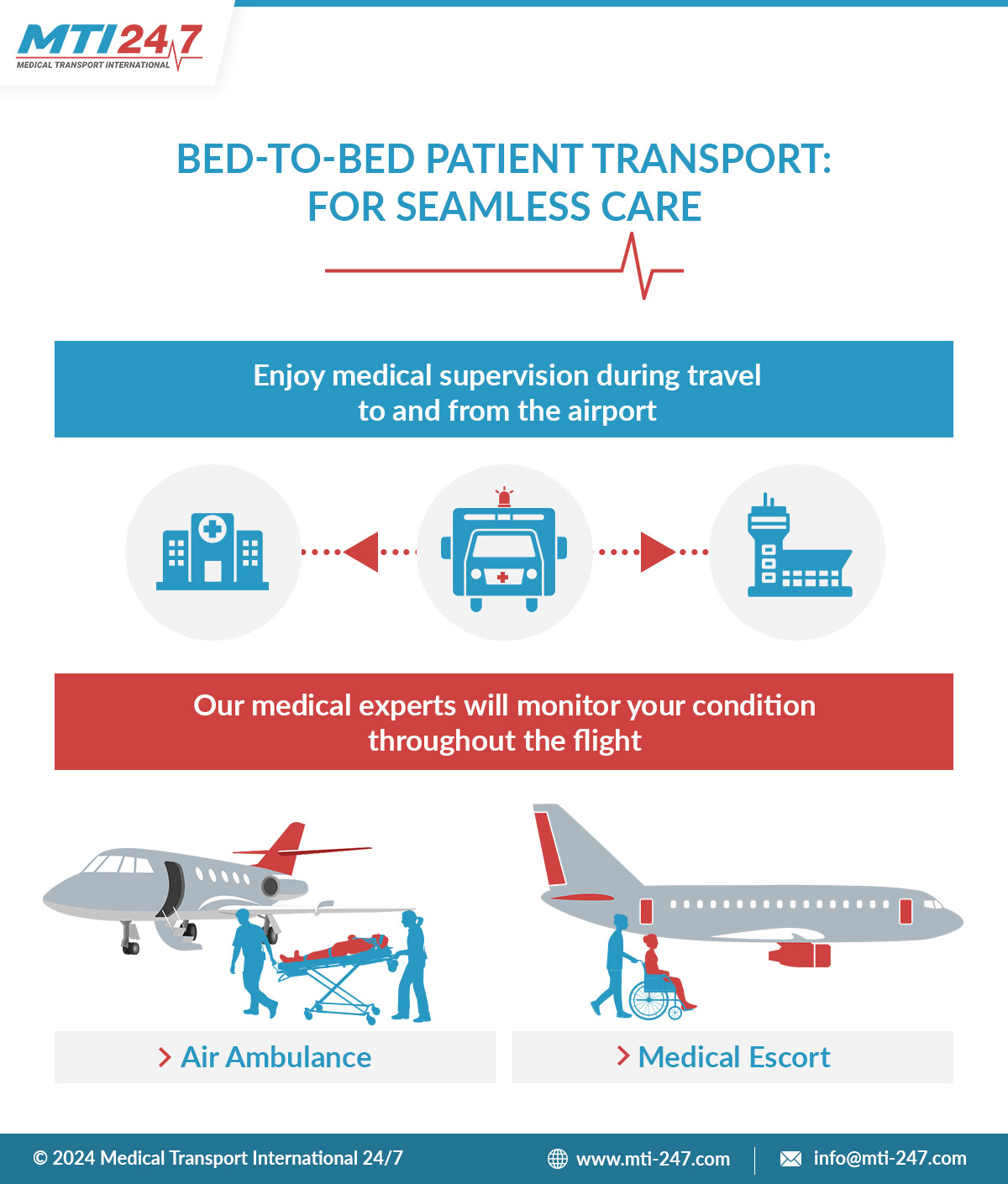
MTI 24/7 coordinates bed-to-bed patient transfers, including ground ambulance transportation to and from airports when required. This helps reduce unnecessary transfer delays and maintain continuity throughout the journey.
Depending on the patient’s condition and location, coordination may include:
ambulance transfer from the hospital, clinic, or residence to the departure airport
airport medical handling and transfer assistance
ambulance reception upon arrival
transfer to the receiving hospital, rehabilitation facility, or home destination
This integrated approach helps simplify complex international medical journeys while supporting safer continuity of care throughout the transfer process.
What is the cost of a medical transport plane?
The cost of a medical transport plane depends on far more than mileage alone. Every mission is medically and operationally customized according to the patient’s condition, travel route, aircraft requirements, and logistical complexity involved in the transfer.
Several factors can influence the overall cost of medical air transport, including:
medical staffing requirements
travel distance and flight duration
aircraft type and operational range
onboard treatment and monitoring needs
airport accessibility and routing complexity
international permits and aviation coordination
ground ambulance transportation before and after the flight
The patient’s medical condition also plays a major role. A stable passenger requiring supervision during travel will not require the same aircraft configuration or medical preparation as a ventilated ICU patient or someone needing continuous respiratory or cardiac support throughout the journey.
Insurance coverage varies according to medical necessity, policy conditions, travel insurance clauses, pre-authorization requirements, and international repatriation coverage. Some insurers partially or fully cover medical transport, while others require detailed medical documentation before approving the transfer.
MTI 24/7 works with both insured and uninsured patients and helps identify the safest and most appropriate transport solution according to the patient’s medical condition, location, and operational requirements.
Why patients and families choose MTI 24/7
When a medical transfer must be organized across cities, countries, or continents, patients and families often face a complex mix of medical, logistical, and travel challenges.
MTI 24/7 helps simplify that process through:
reduced stress for patients and families
access to worldwide medical transport solutions
support for both urgent and non-urgent transfers
continuity of care throughout the transfer process
24/7 availability for international transport requests
seamless coordination between multiple stages of the journey
personalized transport planning based on each patient's condition
solutions ranging from medical escorts to dedicated air ambulances
Every case is different, which is why each transport plan is tailored to the patient's medical needs, travel requirements, and destination.
Contact our team for booking your medical transport plane
When standard travel becomes medically unsafe, swift coordination and appropriate transport planning become essential. MTI 24/7 helps organize medically supervised patient transfers worldwide. Our coordination team is available 24/7 to assess your transport requirements, explain available