:quality(80) "header-bed-to-bed")
:quality(80) "ski-accident")
Switzerland's mountain rescue services stabilize patients on the slope and deliver them to hospital, but organizing the journey home, whether to another Swiss facility or abroad, requires a separate and specialized medical transport coordinator.
The right transport option, dedicated air ambulance or medical escort on a commercial flight, depends entirely on the patient's clinical condition, not on cost or convenience alone.
MTI 24/7 manages every element of the transfer, 24 hours a day, from Swiss hospital bed to receiving facility, including all medical documentation, ground coordination, and in-flight clinical oversight.
Intro: Every winter, thousands of travelers and Swiss residents head to the slopes with nothing but excitement on their minds. Most return home as planned. Some do not. When a ski accident turns a day on the snow into a hospital stay in Verbier, Zermatt, or St. Moritz, a question that patients and families rarely think about in advance becomes suddenly urgent: how does this person get home, or to the right specialist, safely? MTI 24/7 answers that question every day, calmly, precisely, and around the clock.
Ski injuries that commonly lead to medical evacuation from Swiss resorts
Switzerland's mountain terrain is exhilarating, and unforgiving. The combination of altitude, speed, hard-packed snow, and variable conditions creates an injury profile that is genuinely distinct from other sports. Not all ski injuries are equal in terms of transport risk, and this is something every traveler, and treating physician needs to consider before any evacuation decision is made.
Injuries that frequently require organized medical transport out of Switzerland include:
Chest injuries: rib fractures and breathing complications are not always immediately apparent after a high-speed collision; some patients need respiratory support in flight.
Lower leg and ankle fractures: frequently underestimated in complexity; the right specialist and the right surgical plan are usually waiting at home, not in a Swiss resort clinic.
Shoulder dislocations and fractures: directly affect how a patient can be positioned and supported during transport, making clinical planning essential before any transfer begins.
Wrist and forearm fractures: common across all ability levels, from beginners to seasoned skiers; specialist orthopaedic follow-up is usually required before full function can be restored.
Head injuries and concussions: severity is not always visible at first assessment; patients with any degree of head trauma may need active neurological monitoring throughout a medical flight.
Pelvic and thigh fractures: among the most demanding injuries to transport safely; pain management, positioning, and clinical oversight must be coordinated before the patient moves anywhere.
Knee ligament tears (ACL/PCL): the most common serious ski injury worldwide; reconstruction is almost always performed back home, which makes a well-organized medical transfer not optional but inevitable.
Spinal injuries: the most transport-sensitive injury on this list; even a stable spinal fracture requires strict immobilization protocols at every handover point, from hospital bed to aircraft stretcher to receiving ward.
The injury type, clinical stability, and the gap between Swiss hospital capabilities and the patient's home specialist team are the three factors that determine what happens next. Two patients with broken legs may require entirely different transport solutions.
Mountain rescue vs. air ambulance in Switzerland: A distinction that matters
There is a widespread and understandable confusion between what happens on the mountain and what happens after the mountain. These are two entirely separate phases of care, managed by completely different organizations, for completely different purposes.
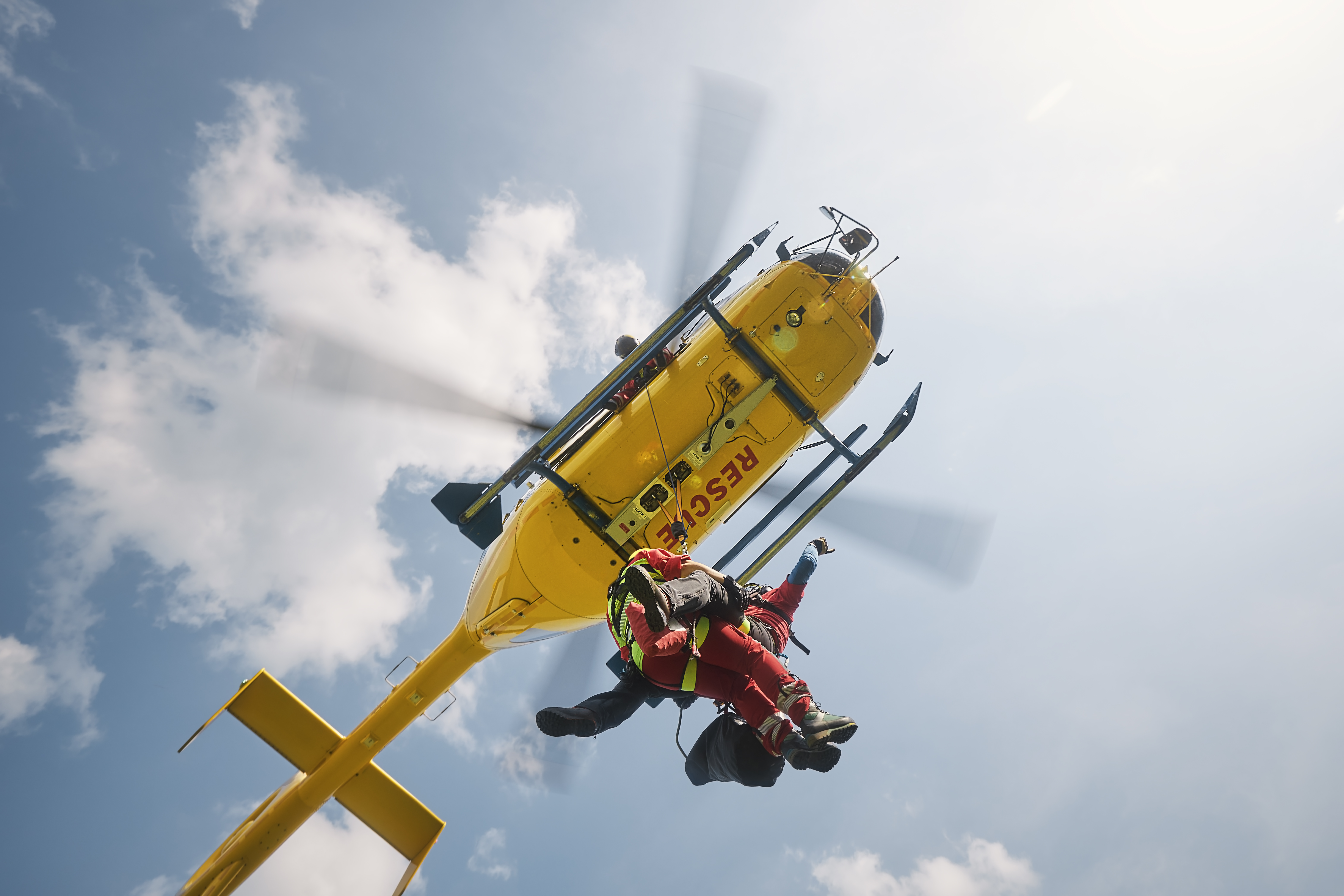
Mountain rescue in Switzerland is the domain of Rega (Swiss Air-Rescue), cantonal rescue teams, and resort ski patrols. The moment an accident is reported on a piste in Davos, Grindelwald, or Saas-Fee, the rescue chain is activated. A helicopter reaches the scene rapidly. The mission is extraction and stabilization: get the patient off the mountain, protect the airway and spine, control bleeding, and deliver the person to the nearest appropriate Swiss trauma center. This is emergency response. It saves lives.
What happens next is a different discipline entirely. Once the patient is in a Swiss hospital, the question of how to get them home safely enters a completely different operational space. It involves fitness-to-fly assessments, aircraft selection, ICU-level in-flight configuration, cross-border documentation, insurance authorization, and receiving hospital coordination. This is where international medical transport begins.
It is worth noting that MTI 24/7 does not perform mountain rescue. What we do is take over with precision the moment the acute phase is over, managing every element of the transfer, whether to another Swiss facility or to a hospital in the patient's home country, from the first bed to the last, leaving nothing to chance and nothing to the patient's family to organize alone.
Air ambulance vs. medical escort from Switzerland: Choosing the right transport for your situation
Once a patient is clinically stable and a treating physician confirms fitness for travel, the medical transport decision begins. The right choice is always driven by the patient's clinical picture, the destination, and what level of medical support is genuinely required in transit.
Dedicated air ambulance
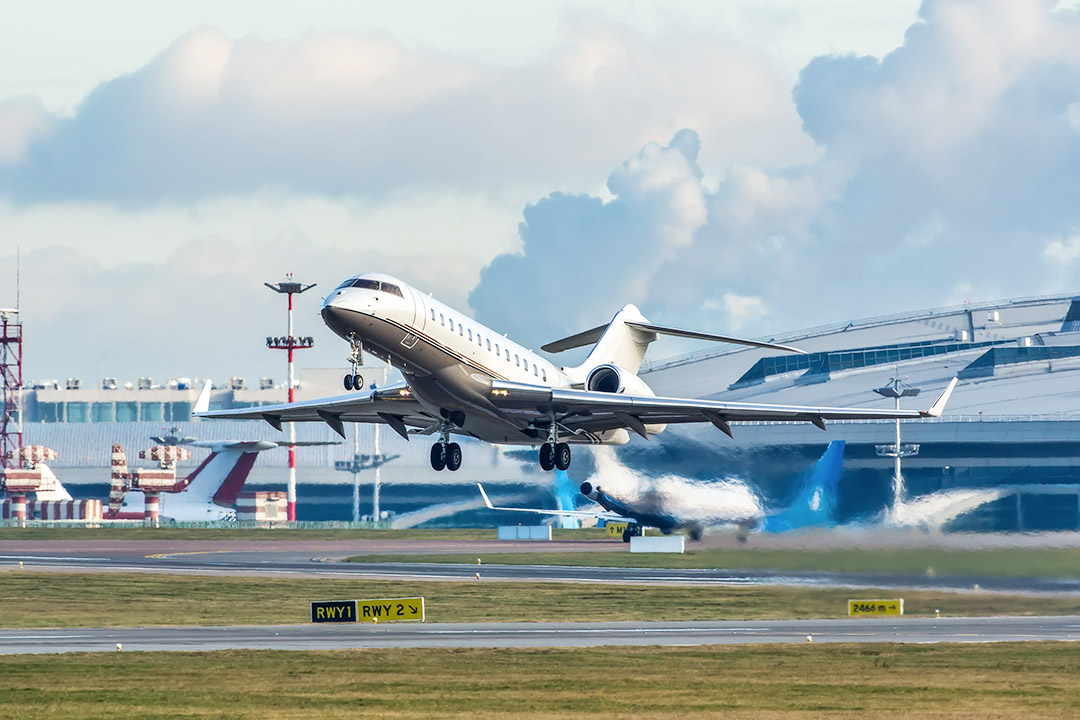
A dedicated air ambulance is a fully equipped ICU in the air. The aircraft carries a physician and a flight nurse or paramedic, along with ventilators, infusion pumps, monitoring systems, defibrillators, and emergency medication. The cabin is pressurized and configured for a stretcher patient. This is the appropriate solution when:
The injury involves spinal trauma, serious head injury, thoracic damage, or post-operative instability.
The situation is time-sensitive and waiting for a commercial schedule is not clinically acceptable.
Commercial airline travel would expose the patient to genuine clinical risk, such as pressure changes, restricted positioning, or inability to respond to deterioration.
The patient requires active medical management throughout the flight, including ventilation, sedation, vasoactive support, or neurological monitoring.
Our air ambulances serving Swiss ski regions typically depart from Geneva (GVA), Zurich (ZRH), Sion (SIR), and Bern (BRN). Sion is the closest airport to Verbier, Crans-Montana, and Zermatt, making it the preferred departure point for urgent missions. Every transfer is managed bed-to-bed, with no gap in clinical oversight from the Swiss hospital to the receiving facility.
Medical escort on a commercial flight
A medical escort is a qualified medical professional, usually a nurse or physician, who travels with the patient aboard a scheduled commercial flight. This is a clinically sound, cost-effective, and widely used solution for the right patient profile. It is appropriate when:
The destination is served by regular commercial routes from Swiss airports.
The patient is post-operative and stable, with well-managed pain and no active monitoring requirements.
The clinical risk of commercial flight is low, and the treating physician has approved the lower acuity transfer.
The injury is orthopedic, a fracture, ligament repair, or joint injury, without vascular or neurological compromise.
Medical escorts handle every practical element of the journey: check-in, boarding assistance, in-flight monitoring, medication administration, and arrival coordination.
The decision is never made by the patient or their family alone. MTI 24/7's medical team reviews the clinical documentation, consults with the Swiss treating team, and advises on the appropriate transport modality, then builds the entire operation around that recommendation.
Why MTI 24/7 is the leading provider for medical evacuation from Switzerland
The Swiss Alps are breathtaking. They are also remote, multilingual, and logistically complex. Getting a patient home safely from a mountain clinic in Graubünden or a trauma center in Valais requires a level of coordination that goes far beyond booking a flight.
MTI 24/7 was built for exactly this environment; clinically led, operationally precise, and available without exception:
True 24/7 availability: not an answering service, but qualified medical coordinators reachable at any hour, on any day, capable of activating a full transport operation in real time.
Multilingual coordination: seamless communication with French, German, Italian, and Romansh-speaking Swiss hospitals, and with medical teams and families worldwide.
Complete insurance documentation: MTI 24/7 prepares and provides all required medical and logistical documentation to support insurance claims and authorization processes.
Global aircraft network: ICU-equipped air ambulances and certified medical escort services covering destinations from London and Paris to Riyadh, Singapore, New York, and Sydney.
Bed-to-bed management: every transfer is planned and supervised from the patient's current hospital bed to the receiving facility, with no handover gaps and no organizational burden left to the family.
Clinical leadership from the first call: a medical team reviews every case from the outset, advising on transport modality, patient positioning, in-flight requirements, and receiving hospital preparation.
Sea level flights: for patients whose condition is sensitive to cabin pressure, MTI 24/7 can arrange flights operating at sea level altitude, eliminating the physiological risks associated with standard cabin pressurization.
For patients, families, hospitals, and assistance companies alike, MTI 24/7 brings one thing above all else: the certainty that nothing will be missed.

Frequently Asked Questions
My family member is in a Swiss clinic after a ski accident. What is the first step? Contact MTI 24/7. The team will ask for the patient's location, the treating physician's name, a brief summary of the medical situation, and your insurance or payment information. From there, every element of coordination is handled: clinical assessment, transport planning, and receiving hospital briefing.
Does travel insurance cover medical evacuation from Switzerland after a ski accident? Most comprehensive travel and winter sports insurance policies include medical flight coverage. Coverage terms vary significantly between policies, and insurers typically need to authorize the transport method.
Is a dedicated air ambulance always necessary after a ski injury in Switzerland? Not always. Many patients with fractures or ligament injuries can be safely repatriated via medical escort on a scheduled commercial flight once they are clinically stable and cleared for travel. MTI 24/7's medical team assesses each case individually.
Get home safely after a Swiss ski accident
If you or someone you care for has been injured skiing in Switzerland, reach out to MTI 24/7. Our team is available at any hour, on any day, ready to take the entire weight of medical transport coordination off your shoulders, so your only focus can be recovery.