:quality(80) "header-bed-to-bed")
:quality(80) "air ambulance companies")
How to choose an air ambulance company: Quick summary
Air ambulance companies provide specialized medical transport across regions and borders using equipped aircraft, trained clinical staff, and coordinated logistics to deliver bed-to-bed care for critically ill patients who cannot tolerate commercial flights or ground transport delays.
Evaluate providers by assessing their operational transparency, safety standards, medical director credentials, 24/7 availability, insurance documentation support, and willingness to explain aircraft selection and clinical decision-making processes.
MTI 24/7 operates globally with ISO 9001 certification, industry partnerships, real-time coordination, and direct medical oversight, removing barriers between patients and the specialized care they need.
Intro: Air ambulance services exist to solve a critical problem: when patients need urgent medical transport across distances or borders, commercial flights and ground ambulances often cannot provide the speed or clinical capability required. Choosing the right air ambulance provider requires understanding how these services operate, what differentiates providers, and which safety credentials and operational standards truly matter. This guide explains what to look for when evaluating an air ambulance company and introduces the market landscape of global providers.
What are air ambulance companies?
Air ambulance companies are specialized medical transport providers that operate dedicated aircraft equipped with medical equipment and trained clinical staff to transport critically ill or injured patients across regions and borders. These services bridge the gap between emergency response and definitive medical care, serving patients who cannot tolerate the delays or physical demands of conventional transport.
The aircraft themselves, whether fixed-wing jets, turboprops, or helicopters, are configured as flying intensive care units, with ventilators, cardiac monitors, defibrillators, IV lines, and oxygen delivery systems. The medical team aboard typically includes flight nurses, paramedics, and physicians trained in critical care transport medicine. This combination of speed, equipment, and expertise creates the medical environment necessary for transporting patients who are too unstable for commercial aviation.
Air ambulance services address multiple transport scenarios:
A family may seek to bring a critically ill relative home for end-of-life care.
A stroke patient in a rural location may need swift access to a comprehensive stroke center hundreds of miles away.
A business traveler experiencing a cardiac event abroad may need repatriation to their home country's specialized facility.
A patient recovering from surgery in a remote location may require transfer to a rehabilitation center with specific capabilities.
In each case, air ambulance coordination solves the logistics of matching patient needs with appropriate medical resources, available aircraft, and destination facilities.

Types of air ambulance providers: Understanding the market
The air ambulance industry comprises several distinct business models, each with different strengths, geographic coverage, and operational philosophies. Understanding these categories helps clarify what to expect from different providers.
Hospital-based air ambulance programs operate aircraft primarily to serve their own medical system and affiliated facilities. These services typically provide strong clinical protocols aligned with their hospitals' standards and often maintain high utilization rates within their geographic region. However, their geographic reach may be limited, and they may prioritize transfers to their own facilities over patient choice of destination hospitals.
Insurance-affiliated providers operate as part of medical transport networks designed to manage costs and coordinate care for insured populations. These services often have strong relationships with major insurers and streamlined pre-authorization processes. Their primary focus is efficient care coordination within contracted networks, which may or may not align with individual patient preferences or optimal clinical routing.
Regional air ambulance operators provide domestic medical transport within defined geographic areas, often serving multiple hospital systems and rural communities. These services typically offer rapid response times within their coverage region and strong relationships with local hospitals and emergency services. Their capacity for international or long-distance transfers may be limited.
Global medical transport coordinators specialize in international transfers and cross-border logistics, operating independent aircraft or managing partnerships with operators worldwide. These providers excel at navigating complex regulatory environments, managing repatriation cases, and coordinating multi-leg transfers across continents. They typically maintain 24/7 availability and infrastructure for handling patients stranded abroad or requiring transport between countries.
Each model has legitimate applications. The right choice depends on whether your needs are primarily domestic or international, whether geographic flexibility or network efficiency is the priority, and whether you prefer working with a single coordinating organization or managing direct relationships with multiple providers.
Services offered by air ambulance companies
Air ambulance companies provide both domestic medical flights within a single country and international medical transport across borders, tailored to the severity of the patient's condition and the distance involved.
The core services offered by leading air ambulance providers include:
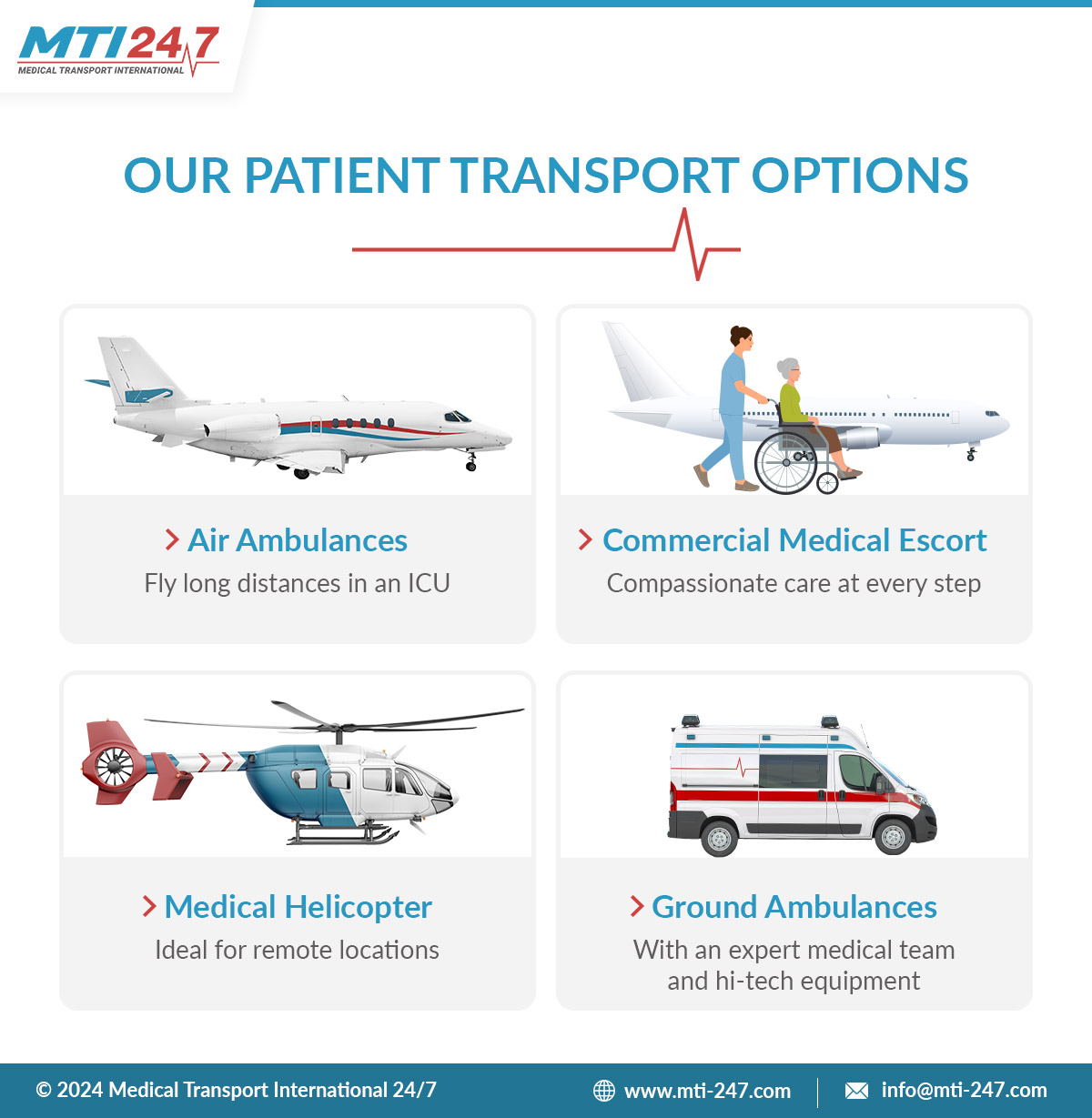
Fixed-wing jet transport for long-distance international transfers, offering pressurized cabins, full ICU capability, and speed for patients traveling thousands of miles.
Turboprop and light aircraft services for regional domestic transfers, delivering medical transport to remote airfields and smaller regional hospitals.
Helicopter emergency medical services for rapid point-to-point transport, particularly valuable for trauma patients and time-critical conditions.
Medical escorts on commercial flights for stable patients who require clinical supervision but don't need a dedicated aircraft, reducing costs while maintaining appropriate care.
Repatriation coordination for patients stranded abroad due to illness or injury, including visa assistance, insurance liaison, and destination hospital arrangements.
Ground-to-air coordination with ambulance services at origin and destination, ensuring seamless bed-to-bed transport.
24/7 dispatch and logistics including flight planning, crew arrangement, aircraft availability, regulatory compliance, and real-time communication with all parties.
Insurance authorization and billing to navigate complex international healthcare policies and verify coverage before transport begins.
Medical evacuation services for transporting patients from their current location to another country or region for specialized care unavailable locally, including coordination with receiving hospitals and international medical centers.
These services address the full spectrum of medical transport needs, from routine transfers between specialized centers to emergency repatriations of critically unstable patients. A well-coordinated air ambulance service integrates these components seamlessly, reducing delays and preventing gaps in patient care.
How to choose an air ambulance company: Safety standards, accreditations & red flags
Selecting an air ambulance provider is a high-stakes decision that requires careful evaluation of credentials, safety culture, operational capacity, and transparency. The right provider should demonstrate unwavering commitment to medical excellence, regulatory compliance, and patient-centered coordination.
Understanding air ambulance provider models:
Air ambulance companies operate under two primary business structures. Some providers directly own and operate aircraft and hold their own operational certifications. Others coordinate medical transport by partnering with vetted, certified operators worldwide. Both models are legitimate; what matters is transparency about how they maintain safety standards, verify clinical protocols, and ensure accountability on every transport.
Essential criteria when evaluating any air ambulance company:
Direct operator certification or partner verification, meaning the provider either holds CAMTS accreditation and FAA Part 135 certification (US) or maintains documented partnerships exclusively with operators meeting these standards.
Medical director oversight, including board certification in emergency medicine, critical care, or flight medicine, with documented responsibility for clinical protocols and medical decision-making on every transport.
Pilot and crew qualifications, requiring documented minimum flight hours, appropriate ratings, recurrent training in emergency procedures, and verified critical care medical experience for flight nurses and paramedics.
Aircraft maintenance accountability, with verifiable commitment to FAA Part 135 (US), EASA standards (Europe), or equivalent international aviation authority standards, regardless of whether the provider operates aircraft directly or through partners.
Insurance and liability coverage, comprehensive policies protecting patients while demonstrating financial stability and risk management capability.
International regulatory compliance, including IATA certification for medical transport, dangerous goods handling protocols, and established cross-border medical procedures.
Transparent cost assessment, with clear communication about cost drivers, distance, aircraft type, medical complexity, crew requirements, rather than fixed quotes that ignore individual patient needs.
24/7 operational availability with documented response protocols and demonstrated capacity to mobilize aircraft within reasonable timeframes, day or night.
Red flags suggesting a provider may not meet professional standards:
Limited availability during nights, weekends, or holidays.
No clear communication channels for ongoing updates during transport.
Unwillingness to explain aircraft selection process for specific patient types.
Absence of a medical director or documented clinical governance structure.
Inability to name certified partner operators or reluctance to provide their credentials.
Pressure to commit to transport before medical assessment or insurance authorization.
Reluctance to discuss operational model, accreditations, partner certifications, or safety protocols.
Vague pricing structures with no attempt to understand specific transport requirements before quoting costs.
A credible air ambulance provider will answer all operational and credentialing questions directly, provide verifiable documentation of their own credentials or their partners' certifications, explain their clinical decision-making process transparently, and prioritize your medical needs over revenue or convenience. The provider's commitment to transparency and regulatory compliance directly correlates with safe outcomes.
MTI 24/7: A case study in global medical air transport excellence
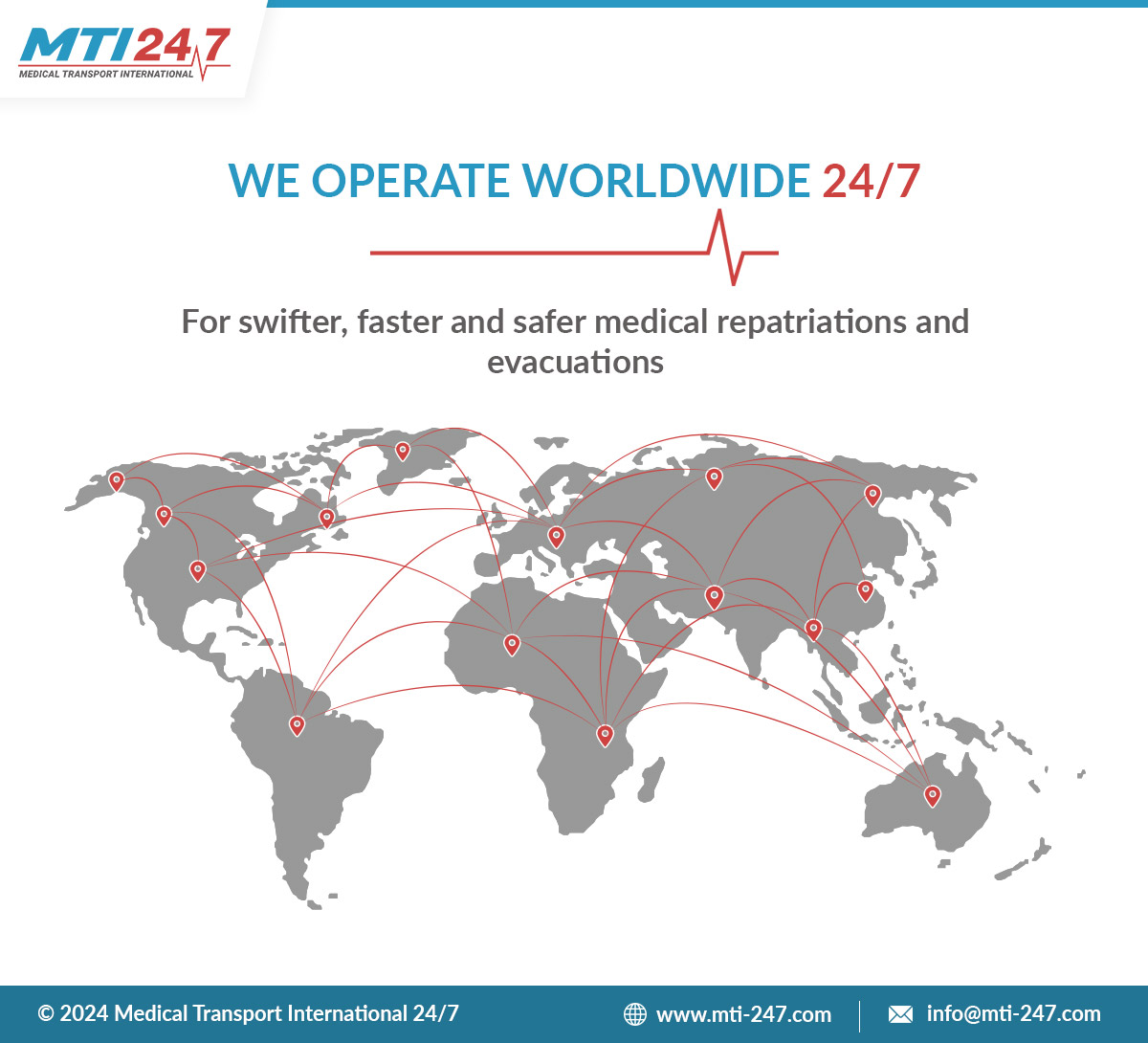
MTI 24/7 operates as a globally integrated medical air transport coordinator, delivering bed-to-bed medical transport solutions across every continent and time zone. We partner with trusted healthcare professionals while maintaining direct clinical oversight and operational accountability to ensure every transport meets the highest standards.
Our commitment to quality and safety is embedded throughout our operations and verified through industry partnerships and certifications. Our approach prioritizes global reach, 24/7 availability, and specialized expertise in cross-border medical logistics, solving the coordination challenges that arise when patients require medical flights beyond regional borders.
MTI 24/7's commitment to excellence includes:
Worldwide availability across six continents, enabling transport regardless of origin or destination geography.
Quality management certification according to ISO 9001 standards, verified by TÜV SÜD and Bureau Veritas, ensuring consistent operational and safety practices.
Verified aviation and medical partnerships, including membership in the Association of Air Medical Services (AAMS), National Business Aviation Association (NBAA), and National Air Transportation Association (NATA).
Multi-aircraft coordination, dispatching fixed-wing jets for intercontinental distances, helicopters for regional needs, and commercial flight medical escorts for stable patients.
Comprehensive logistics coordination, managing ground ambulances at origin and destination, navigating landing permissions, arranging specialized medical equipment, and processing regulatory documentation.
Insurance documentation support, providing comprehensive medical and transport documentation needed for insurance claims and pre-authorization, enabling patients and families to liaise directly with their insurance providers.
Real-time patient and family updates, providing transparent communication about flight status, medical condition, and arrival logistics.
Continuous quality and safety management, including operational auditing, protocol review, and adherence to international aviation and medical standards.
Humanitarian commitment, partnering with Médecins Sans Frontières to support access to medical care regardless of geographic or economic barriers.
24/7 operational availability with rapid dispatch and coordination capabilities to mobilize transport solutions on urgent timelines.
MTI 24/7's integrated coordination model solves an essential need: international medical transport demands regulatory knowledge, insurance relationships, 24/7 infrastructure, and operational flexibility that many regional services cannot sustain. By maintaining direct clinical oversight while coordinating with a global network of certified partners, MTI 24/7 delivers the combination of medical expertise, global reach, and accountability that patients and families require during medical crises.
We exist to remove barriers between critically ill patients and the care they need, whether coordinating swift domestic transport, or managing complex international transfers. When you need medical transport coordination that combines global capability with verified quality standards and direct accountability, contact MTI 24/7 24/7 to assess your situation and coordinate a transport plan aligned with your medical needs and circumstances.
Contact our 24/7 medical coordination team now for a free quote
When medical transport is urgent, clarity matters. Contact MTI 24/7's medical coordination team now for a free, obligation-free assessment of your transport needs, medical requirements, and logistics planning; available every hour, every day.