:quality(80) "header-bed-to-bed")
:quality(80) "netherlands")
Key things to know about medical repatriation from the Netherlands
Medical repatriation from the Netherlands may involve air ambulances, medical escorts, commercial stretcher flights, and ground ambulance coordination depending on the patient’s condition.
Air ambulance transfers from Amsterdam are commonly used for critically ill, ventilated, trauma, cardiac, neurological, and non-ambulatory patients requiring continuous medical supervision.
Medical escort services on commercial airlines allow stable patients to travel safely with professional medical monitoring, airport assistance, and approved onboard medical equipment.
Intro: A medical emergency abroad can rapidly turn a trip into a complex logistical and medical situation. Hospitalization, language barriers, insurance limitations, mobility restrictions, and uncertainty about travelling safely often place significant pressure on patients and families. Medical repatriation from the Netherlands allows international travelers to continue treatment closer to home under appropriate medical supervision. MTI 24/7 coordinates worldwide bed-to-bed patient transfers from the Netherlands using specialized medical transport solutions adapted to each case.
When is medical repatriation from the Netherlands necessary?
Medical repatriation from Amsterdam or other Dutch cities may become necessary when a patient cannot safely continue travelling independently after illness, injury, surgery, or hospitalization.
Common situations include:
Serious infections
Orthopedic injuries and fractures
Stroke or neurological emergencies
Heart attack or cardiac complications
Reduced mobility after hospitalization
Respiratory illness requiring oxygen support
Elderly travelers requiring supervised transport
Patients are usually stabilized in a Dutch hospital before international transport is considered. Once doctors confirm that travel is medically possible, the transport method is selected according to the patient’s condition, destination, mobility level, and required medical supervision.
How is international medical repatriation from the Netherlands organized?
International patient transfers involve medical planning, transport coordination, aviation logistics, and continuity of care throughout the journey.
The process begins with a detailed medical review. Medical reports, diagnosis, current treatment, mobility restrictions, oxygen needs, infection risks, and possible in-flight complications are evaluated to determine the safest transport solution.
The transport option may include:
Ground ambulance connections
Combination transport solutions for long-distance repatriation
Flight routing and logistics are then organized according to:
Travel distance
Patient stability
Airport accessibility
Destination hospital location
Medical equipment requirements
MTI 24/7 coordinates the operational aspects of the transfer, including communication with medical teams, aircraft arrangements, airline medical clearance procedures, ambulance scheduling, medical crew preparation, and destination handover planning.
The objective is continuous medical supervision from the departure location in the Netherlands until arrival at the receiving hospital, rehabilitation facility, or home destination.
Air ambulance from Amsterdam for critically ill or non-ambulatory patients
An air ambulance from the Netherlands is a dedicated medical aircraft equipped for patients requiring advanced medical supervision during international transport.
Air ambulance repatriation is commonly used for:
ICU patients
Ventilated patients
Severe trauma cases
High-risk cardiac patients
Post-neurosurgical transfers
Patients unable to sit upright
Patients requiring continuous monitoring
Time-sensitive international hospital transfers
Patients dependent on advanced oxygen support
Unlike scheduled commercial travel, air ambulance flights are organized around the patient’s medical condition, allowing greater flexibility in routing, medical staffing, departure timing, and onboard care configuration.
Benefits of air ambulance repatriation include:
Reduced transfer delays
Specialized medical staffing
ICU-capable onboard medical environment
Fewer physical constraints for fragile patients
Direct coordination between medical facilities
Continuous medical monitoring throughout the flight
Depending on the patient’s condition and destination, the aircraft may be configured for intensive care transport, long-haul medical repatriation, or specialized respiratory and cardiac support.
Medical escort on commercial flights from the Netherlands
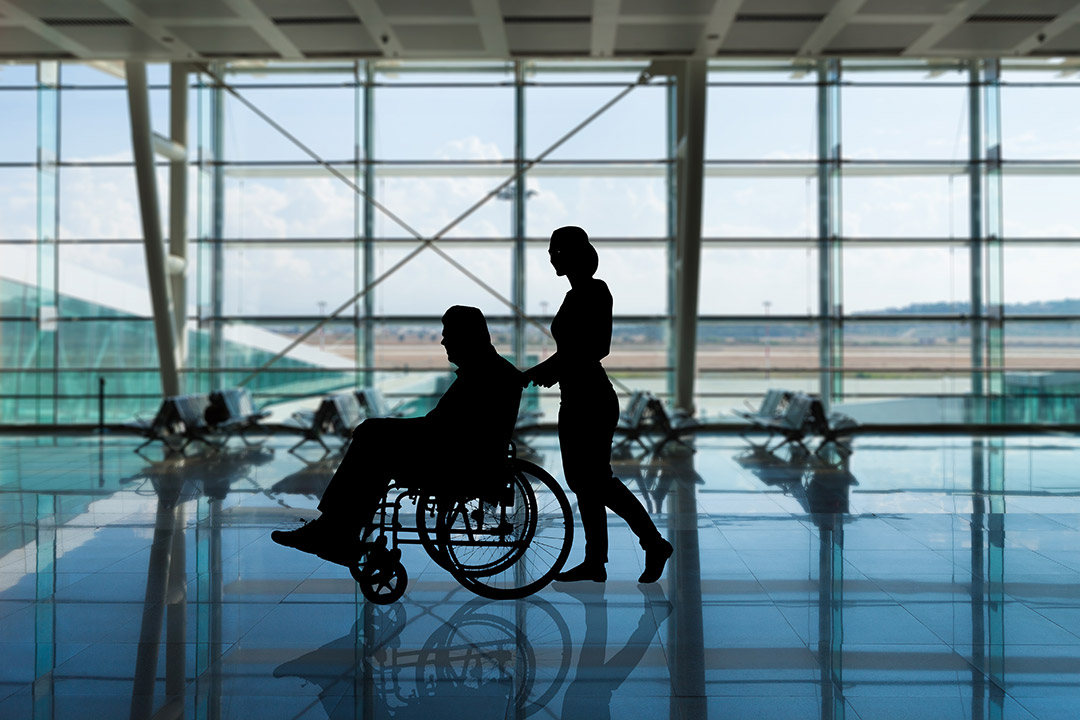
A medical escort on a commercial airline allows medically stable patients to travel internationally under professional supervision without requiring a dedicated air ambulance.
This option is frequently suitable for:
Post-surgical patients
Stable cardiac patients
Patients with reduced mobility
Respiratory patients requiring oxygen
Patients recovering after hospitalization
Neurological patients requiring supervision
Travelers unable to manage airports independently
Medical escorts coordinate and supervise the patient throughout the journey, including airport assistance, boarding, in-flight monitoring, medication management, symptom observation, and coordination with airline personnel.
Commercial medical escort benefits:
Monitoring of stable medical conditions
Support for oxygen-dependent travelers
Reduced travel stress for vulnerable patients
Professional medical supervision during travel
Assistance throughout airports and connections
Cost-effective alternative to dedicated air ambulances
Safer long-distance commercial travel after hospitalization
Commercial medical escort services are organized only after confirming that the patient is medically fit for airline travel.
Medical equipment used during air ambulance and medical escort flights
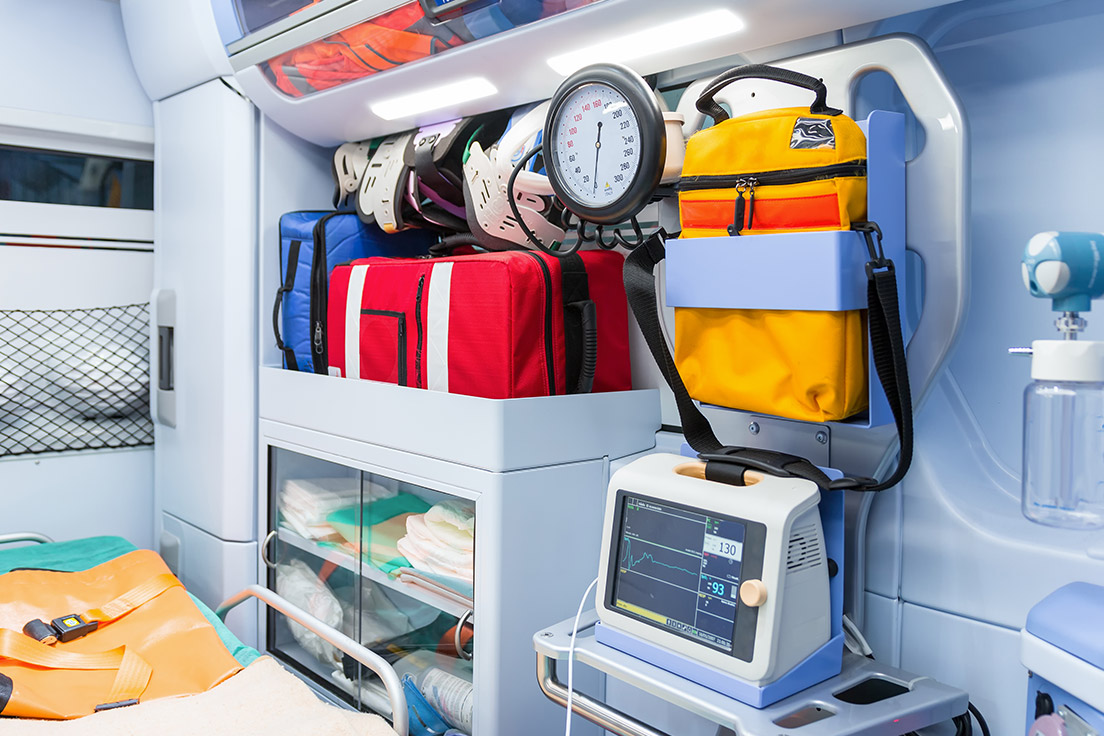
Our air ambulance medical equipment is selected according to the patient’s diagnosis, injury pattern, respiratory status, cardiovascular stability, and required level of monitoring.
Equipment used for respiratory conditions
Patients with:
COPD
Severe asthma
Respiratory failure
Pulmonary embolism
Interstitial lung disease
Post-COVID complications
may require:
Ventilators
Suction systems
Portable oxygen systems
Pulse oximetry monitoring
Portable oxygen concentrators
Respiratory monitoring devices
Airway management equipment
Equipment used for cardiac patients
Patients recovering from:
Heart attack
Arrhythmias
Heart failure
Cardiac surgery
Unstable blood pressure conditions
may require:
Cardiac monitors
Defibrillation capability
Continuous oxygen support
Emergency cardiac medication
Equipment used for neurological and trauma cases
Patients with:
Stroke
Spinal trauma
Seizure disorders
Multiple fractures
Severe orthopedic injuries
may require:
Positioning devices
Neurological monitoring
Pain management support
Immobilization equipment
Specialized stretcher systems
Continuous vital sign observation
Equipment used for ICU and ventilated patients
Critical care air ambulance flights may include:
ICU ventilators
Infusion pumps
Suction systems
Critical care medication
Oxygen reserve systems
Advanced cardiac monitoring
Emergency airway equipment
For commercial medical escort flights, medical equipment must comply with airline safety regulations, cabin space limitations, battery restrictions, and pre-approved medical clearance procedures. Certain devices require advance authorization from the airline before departure, particularly oxygen equipment, suction devices, ventilators, and battery-powered medical systems.
Airlines may request:
Equipment specifications
Battery type and duration
Oxygen flow requirements
Details about the patient’s condition
Medical clearance forms (MEDIF forms)
Confirmation that the equipment is certified for air travel
Some airlines permit only specific portable oxygen concentrator models approved for onboard use. Others may limit oxygen flow rates, restrict the number of medical batteries carried onboard, or impose additional requirements for stretcher cases and electrically powered medical devices.
Flight duration, aircraft type, airport infrastructure, and transit connections can also influence which medical equipment can safely and legally be used during the journey. Early medical and logistical planning helps prevent delays, denied boarding, or equipment incompatibility issues on the day of travel.
Coordination with Dutch hospitals and insurance documentation
Medical repatriation often involves coordination between hospitals, families, insurers, medical teams, and international transport providers.
MTI 24/7 assists with:
Fitness-to-fly coordination
Discharge timing coordination
Ground ambulance scheduling
International transport logistics
Collection of medical information
Destination medical handover preparation
Transport planning with healthcare facilities
For insurance-related cases, MTI 24/7 can provide supporting documentation such as:
Equipment requirements
Transport planning details
Medical transport quotations
Medical necessity information
Flight logistics documentation
Insurance approval and reimbursement decisions remain subject to the insurer’s internal policies and review process.

How to choose the best air ambulance provider in the Netherlands
Choosing an experienced medical transport provider directly impacts patient safety, continuity of care, and transport efficiency.
Medical expertise: The provider should be able to organize transport solutions ranging from stable medical escorts to ICU-level international air ambulance transfers.
International coordination experience: Cross-border patient transport requires experience with aviation logistics, medical regulations, hospital coordination, and international routing.
Bed-to-bed transfer capability: Comprehensive repatriation includes ambulances, airport coordination, aircraft arrangements, medical staffing, and destination handovers.
24/7 operational availability: Medical emergencies and hospital discharges often require rapid coordination outside standard business hours.
Clear communication: Families, hospitals, and insurers require accurate medical and logistical updates throughout the transfer process.
Flexible transport solutions: The provider should coordinate the transport method most appropriate for the patient’s condition, mobility level, and medical risk profile.
Documentation support: Well-organized transport documentation facilitates communication with hospitals, families, and insurance providers.
Specialized medical equipment access: Critical care cases require access to equipment adapted for respiratory support, cardiac monitoring, neurological observation, and intensive care transport.
MTI 24/7 coordinates international medical repatriation from the Netherlands with case-specific planning, experienced logistical coordination, and worldwide transport capability.
Contact MTI 24/7 to arrange medical repatriation from the Netherlands
MTI 24/7 coordinates air ambulance flights, medical escort services, commercial stretcher transfers, and bed-to-bed medical transport from Amsterdam and across the Netherlands. Each case is organized according to the patient’s diagnosis, medical stability, destination, and required level of supervision. Contact MTI 24/7 to arrange safe international medical repatriation from the Netherlands.