:quality(80) "header-bed-to-bed")
:quality(80) "wheelchair-patient-transfer")
When a loved one needs to be moved between hospitals, cities, or countries, the decision rarely comes with time to spare. Behind every transfer is a family weighing safety, speed, and clinical continuity, often across borders and time zones. Choosing the right type of patient transfer can shape recovery as much as the treatment itself. That is why MTI 24/7 coordinates each medical transportation mission with one goal: getting the patient safely from one bed to another, anywhere in the world.
Key takeaways on patient transfer and medical transportation:
Patient transfers are organised, planned medical missions for stabilised patients, ranging from urgent cases like stroke or cardiac transfers to non-urgent ones like oncology or post-surgical recovery moves.
The three main modes of medical transport, ground ambulance, air ambulance, and commercial medical escort, are selected based on clinical stability, distance, time sensitivity, and patient comfort.
MTI 24/7 coordinates every mission bed to bed, with a minimum 48-hour standard dispatch window that can be adjusted to each case while keeping the same safety and regulatory standards.
Urgent vs non-urgent patient transfers: medical situations that require medical transportation
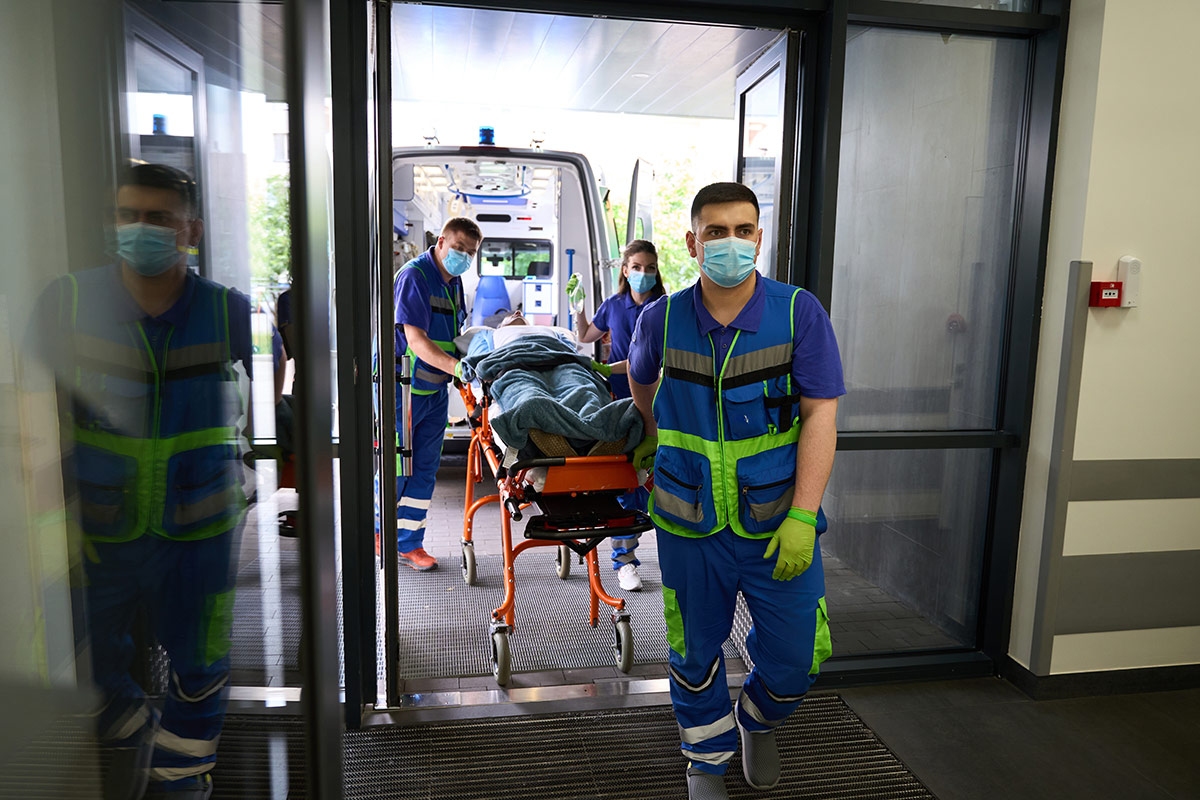
Patient transfer is the organized movement of a stabilized patient from one medical facility to another. However, the first question is never how the patient travels, but what clinical situation they are in.
Medical situations generally fall into two groups: urgent and non-urgent. The examples below show the kind of cases MTI 24/7 coordinates every day.
Urgent medical situations requiring patient transfer:
Acute spinal injury requiring a neurosurgical center.
Premature newborn requiring a NICU with higher capability.
Severe burns needing a dedicated burn unit not available locally.
Severe stroke patient stabilized abroad and needing a specialized stroke unit.
Cardiac patient awaiting bypass surgery or valve replacement in another country.
Oncology patient with sudden complications needing urgent specialized treatment.
Multi-trauma traveler stabilized in a regional hospital but needing tertiary trauma care.
Non-urgent medical situations requiring patient transfer:
Chronic dialysis patient relocating long-term.
Psychiatric patient needing supervised travel back home.
Expatriate choosing to recover from major surgery in their country of origin.
Oncology patient returning home to continue chemotherapy or palliative care.
Stable post-stroke patient repatriated for long-term neurological rehabilitation.
Elderly traveler recovering from a hip fracture, returning home for rehabilitation.
Long-term care patient transferring between facilities for family or insurance reasons.
Important to clarify: MTI 24/7 does not perform rescue missions and does not attend accident scenes. The patient must first be stabilized in a local hospital before any transfer can be organized.
Good to know: A patient transfer is a planned medical mission, not an emergency response. Local ambulance services handle the rescue; MTI 24/7 takes over once the patient is medically stable.
Why patient transfers matter in modern healthcare
Modern healthcare is increasingly specialized, and specialized care is not evenly distributed. A patient may stabilize in one country but need definitive treatment in another.
Medical transfers exist to bridge that gap. They protect clinical outcomes when local resources reach their limit, when insurance policies require repatriation, or when families request care closer to home.
Without coordinated patient transport, three risks rise sharply:
Deterioration during unmonitored travel.
Loss of clinical continuity between treating teams.
Insurance disputes due to undocumented medical handovers.
A properly coordinated transfer turns a fragmented journey into one continuous chain of care, which is exactly what insurers, hospitals, and families expect today.
Advice: Always request a written medical handover before any international transfer. It is the single document that protects clinical continuity across borders.
Emergency vs non-emergency medical transport: dispatch time and process differences
Once urgency is clinically established, the real distinction between emergency vs non-emergency medical transport lies in process and timing, i.e. how the operation is launched and how the workflow unfolds around the patient.
As a standard, MTI 24/7 requires a minimum of 48 hours between mission confirmation and departure. This window allows our teams to secure medical clearances, overflight permits, ground handling, and the fit-to-fly assessment with the rigor every patient deserves. Depending on the clinical situation, this baseline can be compressed for urgent cases or extended for non-urgent ones.
Emergency (urgent) medical transport process:
Dispatch window: For time-sensitive cases, our coordination teams work to shorten the standard 48-hour timeline whenever clinically and operationally possible, without ever compromising safety checks.
Case review: Our flight physicians conduct a fast-track clinical evaluation as soon as the request is received, prioritizing it over non-urgent files.
Crew mobilization: An ICU-trained flight doctor and flight nurse are placed on priority standby as soon as the mission is confirmed.
Coordination: Medical, aviation, and ground logistics workflows run in parallel rather than sequentially, allowing the team to compress timelines without skipping steps.
Documentation: Insurance pre-authorization, hospital admission confirmation, and regulatory paperwork are handled on a priority track alongside operational preparations.
Non-emergency medical transport process:
Dispatch window: Planning typically extends from several days to a couple of weeks, giving every party the time to organize the mission calmly and thoroughly.
Case review: The treating team and our flight physicians conduct a complete clinical file review, including comfort, mobility, and continuity-of-care planning.
Crew mobilization: The medical crew is matched precisely to the patient's profile, whether that means a medical escort or a full ICU team.
Coordination: The workflow is sequential and optimized, with a clear focus on patient comfort, dignity, and cost-efficiency.
Documentation: All insurance approvals and admission paperwork are finalized well before departure, leaving no administrative pressure on the day of the mission.
The clinical professionalism is identical in both scenarios. What changes is the planning window and the operational intensity applied at each step of the chain.
Caution: Even when timing is tight, no transfer can bypass aviation and medical regulations. The standard 48-hour framework exists to protect the patient, and every adjustment around it is made with the same safety standards in mind.
How is patient transport organized across different transfer modes?

Once urgency is defined, the next question is how the patient travels. Three main modes cover the vast majority of international cases.
Ground ambulance patient transfers: when road transport is the right choice
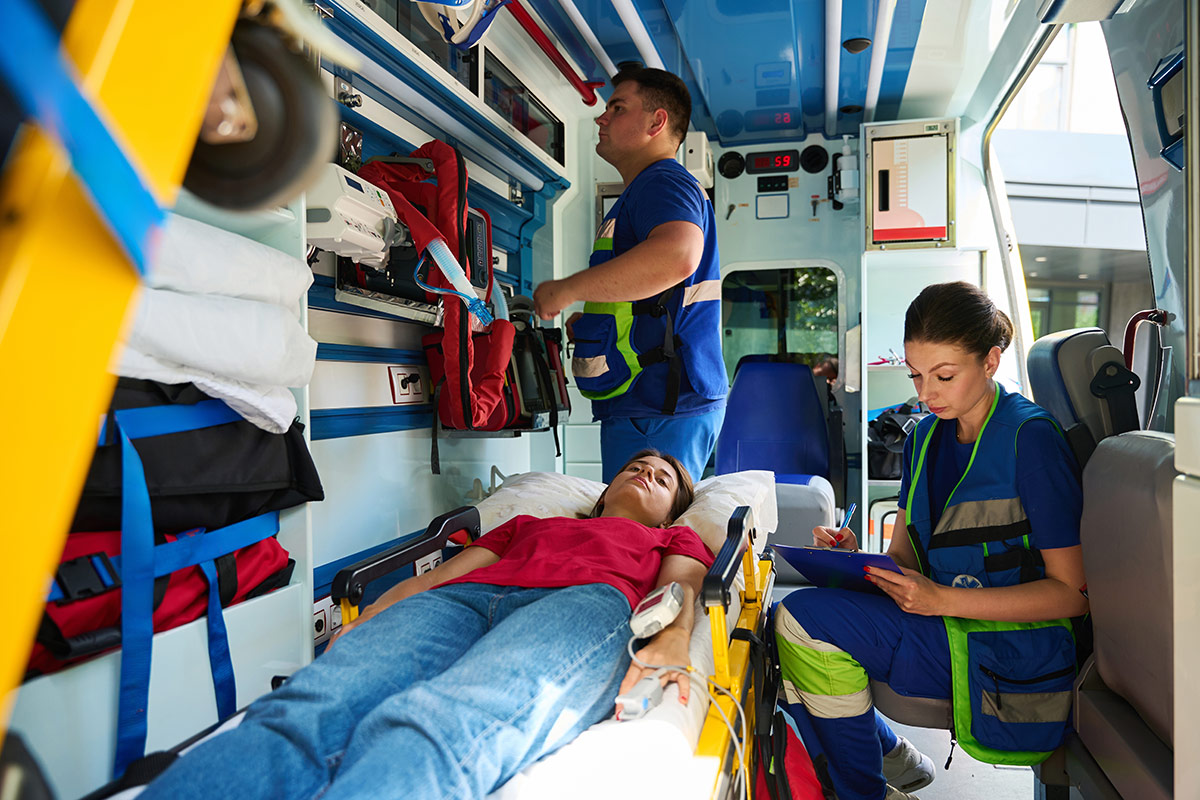
A ground ambulance transfer moves the patient by road, typically between hospitals within the same city, region, or neighboring country. The vehicle is equipped for monitoring, oxygen support, and basic to advanced life support depending on the case.
Key perks: door-to-door access, lower logistical complexity, no airport handovers, and continuous one-team care from departure to arrival.
Best suited for: short-distance hospital-to-hospital transfers, post-discharge transport, dialysis or oncology shuttles, and the first and last mile of every air ambulance mission, because no plane lands at a hospital.
Tip: Even when the main journey is by air, ground ambulance quality often determines the overall patient experience.
Air ambulance transfers for critical patients: ICU in the sky
An air ambulance is a fixed-wing aircraft configured as a flying ICU. It carries a stretcher, ventilator, multi-parameter monitor, infusion pumps, emergency medication, and a dedicated medical crew, typically a flight physician and a flight nurse trained in aeromedical transport.
Key perks: long-range capability, controlled cabin environment, full ICU equipment on board, and the ability to fly direct without commercial constraints. Cabin altitude can be managed for cardiac, neurological, or respiratory patients sensitive to pressure changes.
Best suited for: intubated or ventilated patients, intensive care transfers, neonatal and pediatric cases, complex cardiac or trauma transfers, and any mission where a commercial flight is clinically unsafe.
Good to know: An air ambulance is more than just a fast way to fly; it is a mobile intensive care unit designed to deliver hospital-level care from take-off to landing.
Commercial airline medical escort services: safe travel for stable patients
A medical escort on a commercial flight means the patient travels on a scheduled airline, accompanied by a qualified doctor, nurse, or paramedic. The healthcare escort manages medication, monitoring, mobility, and any in-flight clinical needs.
Key perks: significantly more cost-efficient than an air ambulance, global route coverage through commercial networks, and a discreet, dignified travel experience for stable patients.
Best suited for: medically stable patients who can sit or recline, post-surgical transfers, chronic conditions needing supervision, elderly travelers, and psychiatric patients requiring trained accompaniment rather than ICU-level equipment.
Advice: A commercial medical escort is often the smartest choice when the clinical picture is stable but the journey is long, complex, or emotionally demanding.
Hospital-to-hospital patient transfers: how bed-to-bed service works

A true hospital-to-hospital transfer does not start at the airport and does not end on the tarmac. It starts at the patient's bedside in the sending hospital and ends at the patient's bedside in the receiving hospital.
This is what MTI 24/7's bed-to-bed service delivers: a single, continuous chain of care managed by one coordinator from start to finish.
A typical bed-to-bed mission includes:
Medical case review and fit-to-fly assessment by our flight physicians.
Direct communication with sending and receiving medical teams.
Ground ambulance from the departing hospital to the aircraft.
In-flight intensive care or medical escort, depending on the case.
Ground ambulance from the arrival airport to the receiving hospital.
Full clinical handover with documentation in the destination facility.
Families receive one point of contact. Hospitals receive one medical interlocutor. Insurers receive one consolidated file. That is the operational signature of MTI 24/7.
Tip: Ask any provider whether their service ends at the airport or at the hospital bed. The answer reveals the real level of coordination.
How to choose the right type of patient transfer for your situation
There is no universal "best" transfer, only the best match between the patient and the mission. MTI 24/7 evaluates each case against clear criteria before recommending a transport mode.
The decision is built around:
Patient comfort and dignity: mobility, pain levels, psychological state.
Clinical stability: ICU dependency, ventilation, cardiac or neurological risk.
Time sensitivity: urgent post-stabilization transfer vs planned transportation.
Receiving facility readiness: bed availability, specialty match, admission clearance.
Family and insurance constraints: policy coverage, accompanying relatives, budget.
Distance and geography: regional ground move, intercontinental flight, remote destination.
Our medical team cross-checks these factors with the treating physicians, then proposes the safest and most proportionate option, never the most expensive one by default. Costs depend on distance, aircraft type, crew composition, ground logistics, and medical complexity, which is why every quote is built case by case.
Good to know: The right transfer is the one that protects the patient's clinical trajectory, not the one that simply moves them fastest.
Contact MTI 24/7 to arrange the patient transfer best suited to your case
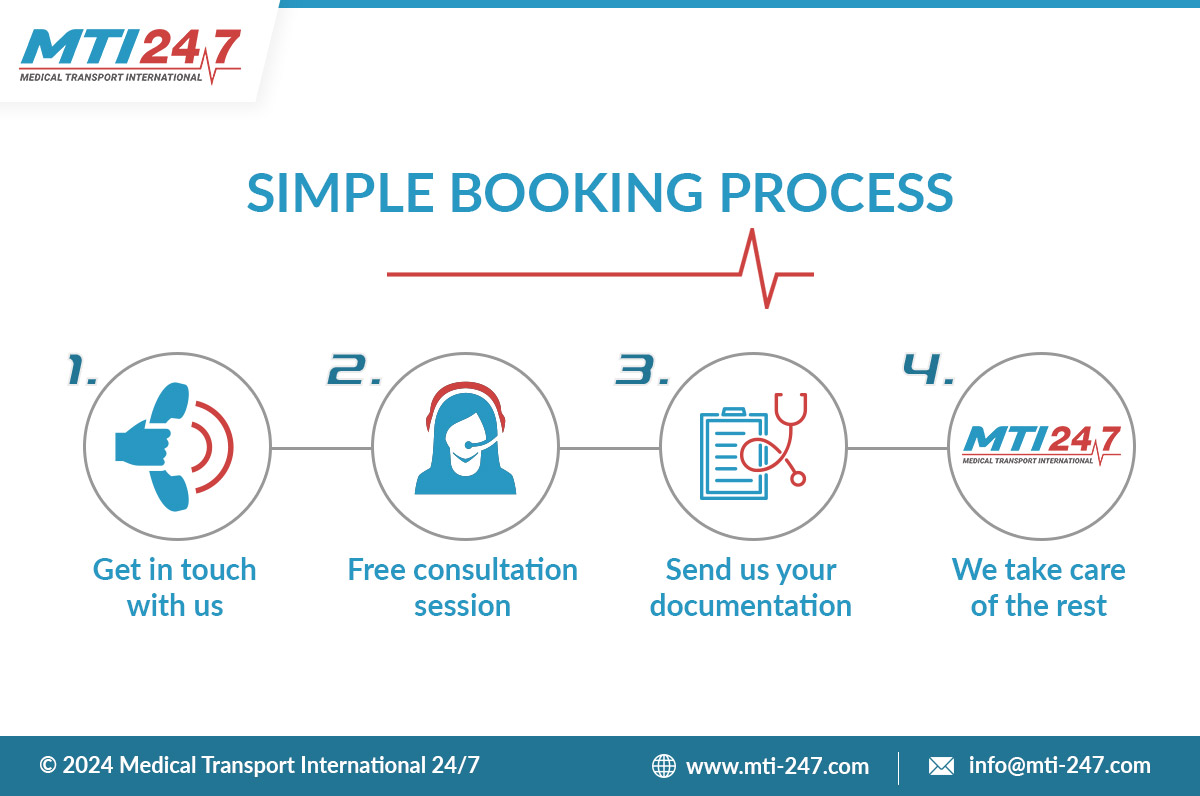
Every medical journey is different, and every family deserves a calm, expert voice on the other end of the line. Whether the situation calls for a ground ambulance, an air ambulance, or a commercial medical escort, MTI 24/7 coordinates each step with the same standard of care, bed to bed, hospital to hospital, country to country.
Reach out whenever clarity is needed. Our medical coordinators are available 24 hours a day, 7 days a week, ready to assess the case, and build the safest transfer plan for the patient at the center of it all.
Contact us by: