:quality(75) "header-bed-to-bed")
:quality(75) "worldcup-2026-01")
The 2026 FIFA World Cup will attract 3.5 million international fans across the United States, Canada, and Mexico. Research on mass gatherings shows that 16.5 to 37 medical incidents occur per 10,000 attendees, meaning hundreds of fans will probably need emergency care during the tournament. For international travelers unfamiliar with local healthcare systems and insurance coverage, understanding air ambulance services, medical evacuation protocols, and repatriation options is essential preparation that could make the difference between recovery and permanent harm.
Medical safety at World Cup 2026
Medical emergencies are statistically probable at World Cup 2026 with 3.5 million international fans attending across three countries. Air ambulance services provide swift transport for life-threatening conditions, while commercial medical escorts offer safe repatriation for stable patients recovering from emergencies.
Cross-border coordination between hospitals, insurance carriers, and aviation authorities is indispensable. MTI 24/7 provides 24/7 coordination, bed-to-bed service, and complete documentation to ensure seamless care across US, Canadian, and Mexican healthcare systems.
Travel insurance with emergency evacuation coverage is essential preparation before attending. MTI 24/7 offers free consultations and personalized assessments to help international fans understand their options and ensure expert medical support is available if needed.
Healthcare preparedness at World Cup 2026: Coordination across three countries
North American health authorities have been conducting extensive preparedness planning since 2024. According to research published in 2025, the 2014 World Cup in Brazil revealed that only 34% of hospitals had received preparedness training and more than half lacked formal public health coordination protocols. Learning from this, 2026 host cities have taken different approaches.
Current preparedness status in host cities:
Hackensack Meridian Health coordinates medical readiness for New Jersey and New York.
The University of Kansas Health System was designated official medical provider for Kansas City.
Northwest Healthcare Response Network leads Washington State's pandemic and mass-gathering preparedness coordination.
SETRAC (Southeast Healthcare Preparedness Coalition) manages emergency response protocols for southeastern host cities.
Each jurisdiction has established:
Multilingual emergency department staff and interpretation services.
Helicopter landing zones with Federal Aviation Administration (FAA) clearance.
Pre-positioned ambulance services and medical team coverage at stadium entrances.
Real-time communication networks between venues, hospitals, and emergency coordination centers.
Incident Command System (ICS) protocols synchronized approximately one month before match day.
Cross-border coordination mechanisms for potential patient transfers between US, Canadian, and Mexican facilities.
According to the CDC's Yellow Book on mass gatherings, preparedness includes planning for both communicable disease risks (crowding, hygiene) and non-communicable conditions (temperature extremes, cardiac events, trauma).

Why medical readiness and evacuation planning is critical during major sporting events
Medical emergencies at large sporting events require specialized coordination that standard emergency services alone cannot provide.
Why medical evacuation planning matters at World Cup 2026:
Crowds of 60,000+ concentrate attendees in confined spaces, increasing cardiac events, syncope, dehydration, and crowd-related injuries.
International fans lack familiarity with local emergency protocols, healthcare systems, and insurance coverage across borders.
Geographic distance from specialized centers (trauma, stroke, cardiology) makes swift air ambulance access critical for time-sensitive conditions.
Cross-border coordination between stadium teams, ambulances, hospitals, insurance carriers, and aviation authorities requires advance planning.
Language barriers complicate emergency communication, medical history assessment, and informed consent.
Without pre-established evacuation protocols and air ambulance standby agreements, straightforward emergencies can escalate into catastrophic outcomes.
Medical readiness ensures patients receive appropriate, timely care regardless of location, language, or insurance complexity.
Proper medical readiness and evacuation planning eliminate these gaps, ensuring that when emergencies occur during World Cup 2026, coordinated systems are already in place to protect international fans.
Air ambulance services: What they are and when they're needed
An air ambulance is a helicopter or fixed-wing aircraft equipped with advanced life support equipment, staffed by physicians, critical care nurses, or paramedics trained in flight medicine. Unlike ground ambulances limited by road conditions and distance, air ambulances provide swift transport to specialized centers (trauma centers, stroke centers, cardiac catheterization laboratories) that may be geographically distant from event venues.
How MTI 24/7 air ambulance dispatch works during World Cup 2026
When a medical emergency occurs at a World Cup stadium, on-site medical personnel provide immediate stabilization and alert the MTI 24/7 coordination center. Our medical directors assess the patient's condition in real-time and determine whether air ambulance transport is appropriate: severe head trauma requiring neurosurgery, acute cardiac events requiring interventional cardiology, or critically ill patients requiring ICU-level flight care.
Once authorized, MTI 24/7 dispatches a dedicated aircraft from pre-positioned standby locations across North America. Our aircraft departs with flight crews trained specifically in aeromedical transport and international medical coordination.
What MTI 24/7 provides during flight:
Physician-led flight crews with specialized flight-medicine training.
Intravenous medication administration and blood product support.
Continuous vital sign telemetry communication with the receiving facility.
Advanced airway management and mechanical ventilation for critically ill patients.
Comprehensive cardiac monitoring with 12-lead ECG transmission directly to receiving hospital physicians.
This allows receiving specialists to prepare intervention (surgery, catheterization, thrombolytic therapy) before MTI 24/7 patient arrival, reducing critical door-to-intervention time and improving patient outcomes. Upon arrival, our flight crew provides complete medical handoff documentation to ensure seamless continuation of care.
Clinical scenarios where air ambulance is appropriate:
Critically ill patients requiring ICU-level flight care and continuous advanced life support.
Severe traumatic injuries requiring neurosurgery or orthopedic trauma care at specialized centers.
Acute ischemic stroke within thrombolytic or thrombectomy therapy windows (time-critical intervention).
Acute cardiac events (ST-elevation myocardial infarction, cardiogenic shock) requiring interventional cardiology.
Patients at remote stadium locations far from appropriate specialty care (distance > 45-60 minutes by ground ambulance).
Cost and insurance coverage:
Comprehensive travel medical insurance policies typically include emergency medical evacuation coverage. MTI 24/7 provides complete medical documentation, flight records, and clinical summaries that enable insurance companies to process evacuation claims efficiently.
MTI 24/7 offers personalized assessments and free, non-binding quotes based on your specific medical situation and destination. Contact us for an evaluation tailored to your needs.
Before traveling to World Cup 2026:
Confirm coverage limits and any exclusions.
Keep your insurance policy details accessible.
Contact MTI 24/7 for a personalized assessment.
Commercial medical escorts: Cost-effective medical flight for stable patients
A commercial medical escort is a licensed medical professional, typically a Registered Nurse (RN), critical care nurse, or flight-certified paramedic. They accompany medically stable patients on regularly scheduled commercial airline flights, providing continuous monitoring, in-flight medical care, and hands-on support throughout travel.
This service is distinct from air ambulance and serves a different clinical population: patients who are medically stable enough for commercial flight but require professional medical oversight during travel due to medication complexity, equipment needs, or communication barriers.
When commercial medical escort is appropriate:
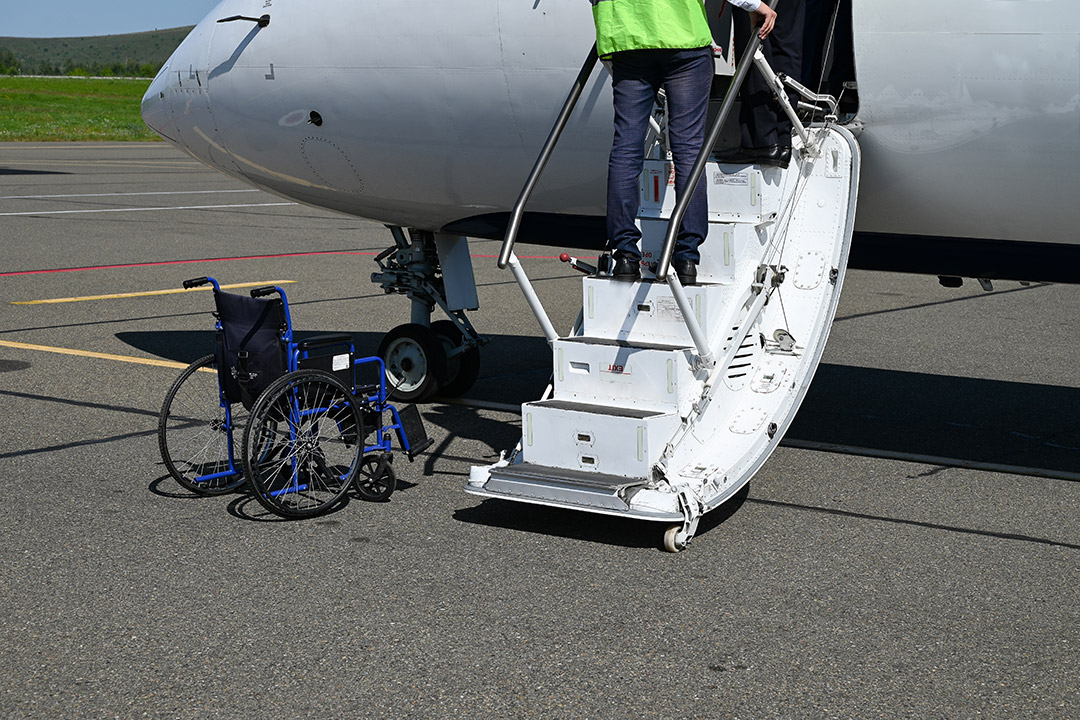
Non-English-speaking patients requiring translation services and medical advocacy.
Elderly or infirm patients requiring logistical support and personal assistance during travel.
Patients who are medically cleared for commercial flight but at risk of complications requiring professional response.
Post-surgical patients requiring wound care, pain management, and medication administration during repatriation.
Patients with chronic conditions (diabetes, COPD, renal disease, hypertension) requiring medication administration or monitoring during travel.
How commercial medical escort differs from air ambulance:
Commercial medical escort uses regularly scheduled commercial airlines for stable patients requiring professional medical oversight during travel. Travel time is longer than air ambulance because it follows commercial flight schedules but offers comfort and convenience for post-emergency repatriation.
Most comprehensive travel insurance policies include medical repatriation benefits that cover commercial medical escort services. MTI 24/7 provides complete medical documentation to facilitate insurance claims and reimbursement.
Contact MTI 24/7 for a personalized assessment to determine whether air ambulance or commercial medical escort is appropriate for your situation.
Medical flights across borders: MTI 24/7 cross-border coordination
World Cup 2026's three-country span requires seamless coordination across multiple healthcare systems, insurance carriers, and international aviation authorities. MTI 24/7 specializes in exactly this complexity: coordinating safe patient transfers when medical needs intersect with international borders.
What MTI 24/7 manages for cross-border evacuations:
24/7 availability ensuring prompt coordination and dispatch for urgent international medical transport.
Insurance verification and documentation delivery to enable claim authorization and reimbursement.
Multilingual coordination teams providing real-time updates to families across language and time zones.
Medical clearance assessments to confirm flight readiness and determine appropriate transport method.
Real-time hospital coordination across US, Canadian, and Mexican facilities with pre-established partnerships.
Complete medical handoff documentation transmitted between sending and receiving hospitals to ensure seamless continuation of care.
Bed-to-bed service ensuring continuous medical care from pickup location to final destination, including ground ambulances at both departure and arrival.
Without expert coordination, international medical flights can face delays in insurance authorization, communication breakdowns between hospitals in different countries, and fragmented care during transfers. MTI 24/7 helps reduce these risks through pre-established protocols, dedicated coordination centers, and experienced teams trained in international medical transport.
Expert medical transport available 24/7 for world cup fans
Medical emergencies at World Cup 2026 are statistically probable. MTI 24/7 provides air ambulance services, commercial medical escorts, and complete coordination to ensure efficient, safe care. Our 24/7 team protects international fans and enables safe repatriation home. Contact us for a free consultation.
Reach us by:
Phone: USA: +16468635532 / UK: +442036080959
Email: info@mti-247.com
Our contact form