:quality(75) "header-bed-to-bed")
:quality(75) "Can You Fly with a Pacemaker?")
You’ve probably asked yourself at some point, “Can I fly with a pacemaker?”. It’s normal to wonder if having a device implanted in your chest could complicate your travel plans. The truth is, having a pacemaker doesn’t have to limit your life, including air travel, especially when you follow a few important safety and preparation steps. This article breaks down everything you need to know about flying with a pacemaker, from medical considerations to airport procedures, and how MTI 24/7 can support you during your journey.
Key Insights About Flying with a Pacemaker
Flying with a pacemaker is generally safe for most people.
It’s important to receive your doctor’s approval before traveling.
You must follow certain airport screening procedures for medical devices.
Some situations require medical clearance, such as recent implantation or unstable symptoms.
Medical escorts or air ambulances offer safe travel options for passengers needing extra support.
MTI 24/7 provides worldwide, bed-to-bed medical transport for pacemaker patients.
What Is a Pacemaker, and How Does It Work?
A pacemaker is a small medical device implanted under the skin to help control abnormal heart rhythms. It sends electrical signals to prompt the heart to beat at a normal rate when it's too slow or irregular.
How a Pacemaker Supports Heart Function
Monitors heart rhythm: Continuously tracks the heartbeat to detect abnormalities.
Delivers electrical impulses: Sends gentle shocks to regulate slow or irregular heartbeats.
Works on demand: Activates only when it senses the heart isn’t beating properly.
Implanted under the skin: Usually placed near the collarbone during a minor surgical procedure.
Connected to the heart with leads: Thin wires deliver impulses directly to heart muscles.
Improves symptoms: Helps reduce fatigue, dizziness, and fainting caused by bradycardia (slow heart rate).
For Which Medical Conditions Do Doctors Recommend Pacemakers?
Doctors typically recommend pacemakers for conditions that cause the heart to beat too slowly, irregularly, or with pauses. This includes:
Bradycardia: A consistently slow heart rate that can lead to fatigue, dizziness, or fainting.
Heart block: A delay or blockage in the electrical signals between the heart’s chambers.
Atrial fibrillation with slow ventricular response: When irregular upper chamber rhythms slow down the lower chambers excessively.
Tachy-brady syndrome: Alternating fast and slow heart rhythms, often part of sick sinus syndrome.
Congenital heart disease: Certain structural heart defects may require pacing support.
Post-cardiac surgery complications: Temporary or permanent rhythm issues following heart surgery may necessitate a pacemaker.
Can You Fly with a Pacemaker?
Yes, flying with a pacemaker is generally safe. Millions of passengers with pacemakers travel every year without issues. Still, it’s always best to receive medical approval before booking your flight.
Here are essential steps for a safe journey:
Get medical clearance from your doctor: Your doctor will confirm that you're fit to fly and may provide a travel letter outlining your condition and medications.
Carry your documentation: Keep your pacemaker identification card in your wallet. It contains details such as the make, model, and manufacturer of your device.
Plan ahead: Pack your medications in your carry-on bag and identify hospitals or cardiac centers near your destination.

Airport Security and Pacemaker Screening Procedures
Airport screening is an important part of the travel process, and passengers with pacemakers can go through security safely with a few precautions.
Before screening:
Inform the security staff that you have a pacemaker.
Show your pacemaker ID card.
If you're unsure about anything, ask your doctor before traveling.
Screening options include:
Full-body scanners
Generally safe for pacemakers. Your device may set off an alarm, but the scanner won’t interfere with its function.
Hand-held metal detectors
Safe when used briefly. If kept too close to your pacemaker for too long, it may cause temporary interference. Politely ask the officer not to hold it over your chest.
Pat-down search
You may request this option if you want to avoid scanners altogether.
Possible Risks and In-Flight Considerations for Pacemaker Patients
For travelers with a stable heart condition, flying with a pacemaker is usually uneventful. However, it's helpful to be aware of a few considerations.
Potential risks include:
Underlying heart condition: Changes in cabin pressure or mild decreases in oxygen levels can be more noticeable for people with existing cardiac symptoms.
Deep Vein Thrombosis (DVT): Prolonged sitting may increase the risk of blood clots, especially in passengers with heart disease.
Electromagnetic interference (EMI): Although rare, very strong magnetic fields can temporarily affect pacemakers. This is why hand-held detectors shouldn’t be held over your chest.
Recent implantation: Flying too soon after a pacemaker procedure can increase the chance of lead displacement.
In-flight recommendations:
Keep all medications in your carry-on bag.
Walk around the cabin every 1–2 hours on long flights.
Carry copies of your latest ECG, your medication list, and your doctor's contact details.
Stay hydrated and avoid alcohol in excess.
When Should You Seek Medical Supervision Before Flying With a Pacemaker?
While flying is safe for most pacemaker patients, there are times when medical supervision is required:
Immediately after implantation or cardiac surgery
If you experienced complications following the procedure
If your heart condition is unstable
After a recent heart attack
If your symptoms have changed or worsened
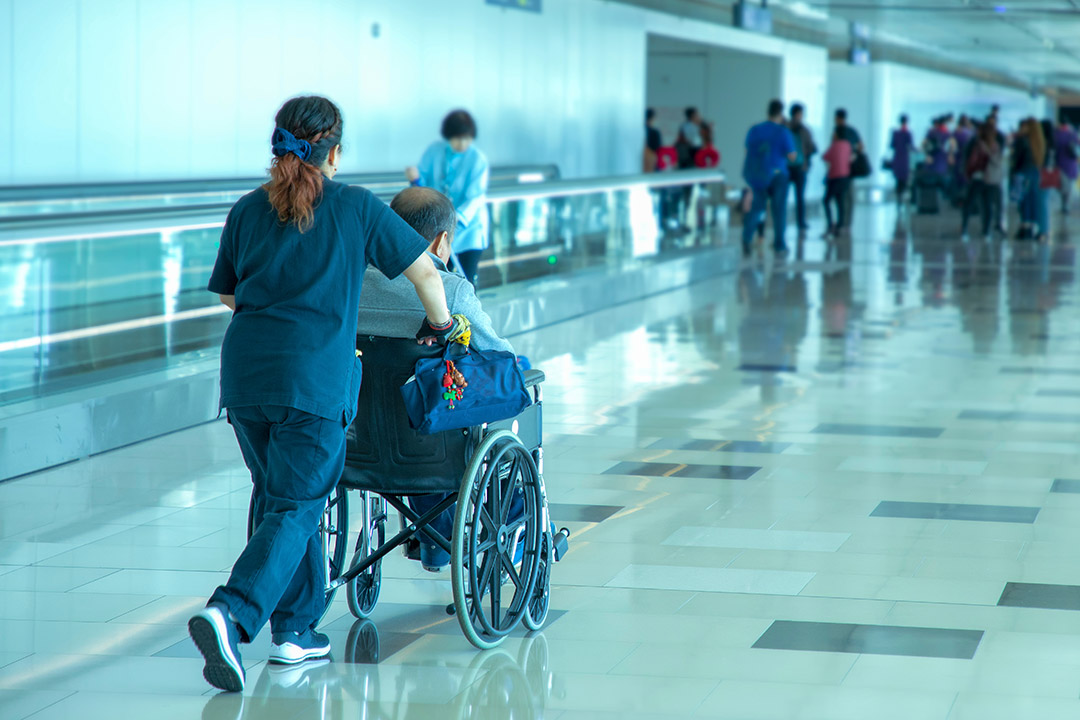
Medical Escort Services for Passengers with Pacemakers
A medical escort is an excellent option for passengers who can travel on commercial flights but would feel safer with a trained medical professional by their side. This service provides reassurance, comfort, and medical oversight throughout the journey.
Consider a medical escort if:
You feel anxious about traveling alone.
You need support with medications, mobility, or oxygen therapy.
You’re flying long distances.
Your doctor recommends medical supervision during travel.
Air Ambulance Support for Cardiac Patients
Air ambulances are designed for patients who cannot travel safely on commercial flights, such as those needing continuous monitoring or a controlled environment.
These specialized flights:
Provide a setting similar to an ICU
Offer uninterrupted medical supervision by seasoned professionals
Include full coordination of logistics such as ground transport and medical clearance
Cost Factors for Medical Flights Involving Pacemaker Patients
The cost of a medical flight does not depend on the pacemaker itself, but rather on the overall travel requirements, such as:
The type of aircraft
Distance and routing
The level of medical care needed
The urgency of the request
The number of accompanying persons
Ground transport arrangements
Every medical flight is customized, and MTI 24/7 tailors each mission to the patient’s needs and circumstances.
Why Is MTI 24/7 the Safe Choice for Passengers with Pacemakers?
MTI 24/7 has years of experience helping patients with cardiac conditions travel safely and comfortably. Our multilingual team is available round the clock and ensures a smooth, supportive bed-to-bed experience, from pickup to handover at the destination. Whether you’re returning home, traveling for treatment, or flying to be closer to loved ones, our team offer guidance, careful planning, and medical supervision every step of the way.
Contact MTI 24/7 for safe travel with a Pacemaker
Travel safely and confidently with a pacemaker. Contact MTI 24/7 for expert medical transport. Our experienced team ensures a smooth and stress-free journey with vehicles equipped for cardiac monitoring and care. Whether it’s a local trip or long-distance travel, we’re here to help every step of the way.
Reach us by:
Phone: USA: +1 646 335 06 83 / UK: +44 20 3608 0959
Email: info@mti-247.com
Our contact form