:quality(75) "header-bed-to-bed")
:quality(75) "Casevac vs. Medivac")
Medevac vs Casevac: Key Takeaways
Medevac is planned medical evacuation using trained medical teams, specialized equipment, and formal coordination to transport patients to appropriate healthcare facilities globally, while Casevac is tactical extraction from immediate danger in military combat zones with minimal medical support.
Medevac applies to civilian emergencies, international repatriation, and inter-hospital transfers, whereas Casevac is exclusively military and prioritizes speed over medical care during active conflict.
MTI 24/7 specializes in comprehensive Medevac coordination, offering air ambulances, helicopter transport, commercial flight escorts, and ground ambulances with multilingual support across 16 languages and ISO 9001 certification.
Intro: Medevac (medical evacuation) is transport to a facility where adequate care exists, whether across your city or globally. Casevac is tactical extraction from immediate danger. The difference matters: Medevac coordinates specialized teams, equipment, and receiving facilities in advance. Casevac prioritizes speed over medical planning. If you are arranging international transport for serious illness or injury, you need Medevac. MTI 24/7 has coordinated thousands of international medical transport missions, with multilingual support across 16 languages and ISO-certified quality processes, helping ensure patients reach appropriate care safely.
What is Medevac?
Medevac (medical evacuation) is the planned transport of a patient from their current location to a medical facility in another country or city where specialized care is available.
When Medevac is needed:
Medical infrastructure in current location is inadequate.
Access to qualified specialists is necessary for treatment.
Safe, monitored travel with continuous medical support is critical.
Patient requires specialized equipment or intensive care unavailable locally.
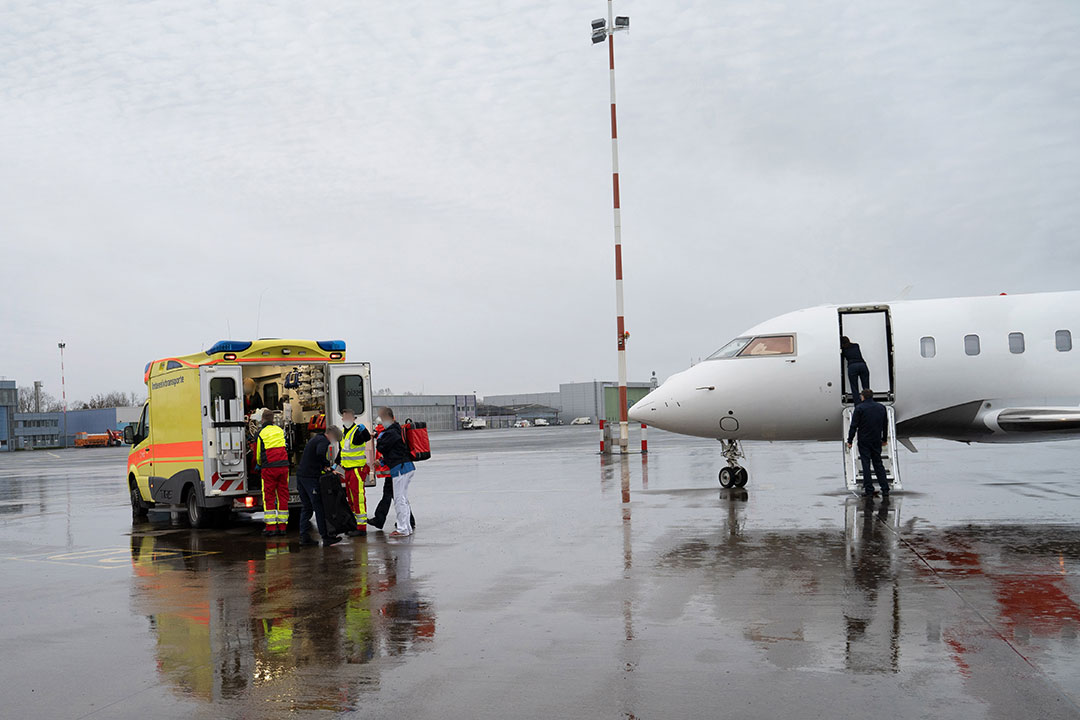
Medevac missions are carefully coordinated through established medical channels. Unlike Casevac's emergency-response protocols, Medevac uses purpose-built air ambulances or commercial flights with trained medical escorts who provide continuous care throughout the journey.
MTI 24/7 specializes in organizing these missions globally. Our multilingual coordination team ensures receiving facilities are prepared, documentation is handled across borders, and patients travel with appropriate medical expertise, whether for life-threatening emergencies, specialized treatments, or planned medical tourism.
What is Casevac?
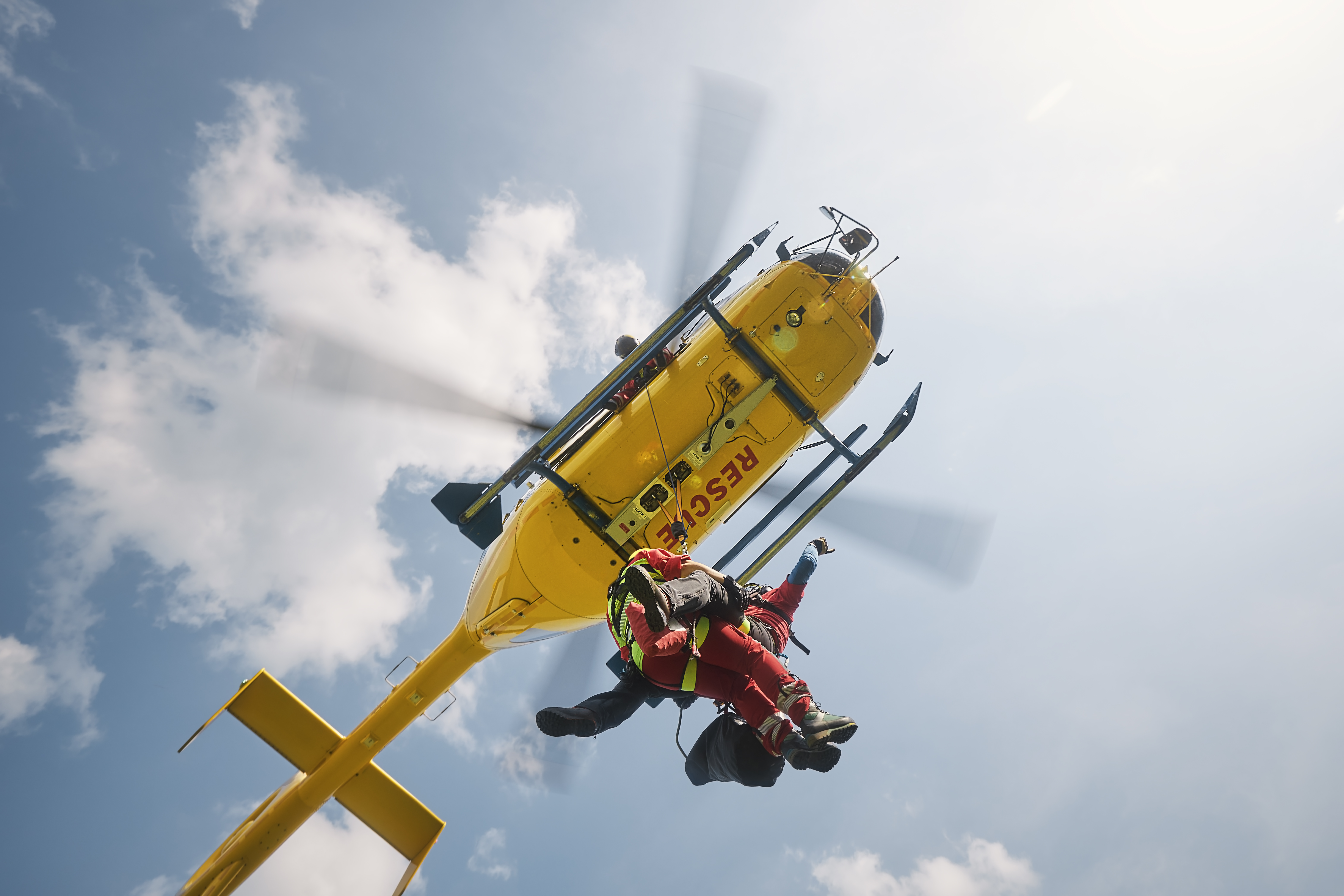
Casevac (casualty evacuation) is rapid transport from immediate danger, primarily used in military combat zones, using available vehicles with minimal advance planning.
Casevac characteristics:
Short-distance transport to nearest facility.
Limited or no medical equipment onboard.
No advance coordination with receiving location.
Prioritizes speed of extraction over medical care.
Non-medical personnel may conduct evacuation.
Uses general-purpose vehicles (combat helicopters, trucks, armored vehicles).
Casevac originates in military tactical operations where getting a casualty out of active danger is the primary goal. The receiving facility may have limited advance notice. Once a casualty reaches a secure medical facility, medical coordination shifts to Medevac protocols. Casevac is not a civilian medical transport option and does not apply to international patient transportation.
What are the key differences between Medevac and Casevac?
Understanding the specific distinctions between these two evacuation methods clarifies when each is appropriate and what patients can expect during transport.
Planning and coordination
Medevac requires careful advance planning. When a mission is requested, our medical coordinators evaluate patient condition, determine appropriate transport method and receiving facility capability, and coordinate across multiple countries. Depending on medical urgency and international clearances, this may take several hours to two days, but it allows for safer, medically optimized outcomes. Casevac requires no advance planning; decisions are made in real time by tactical commanders based on immediate battlefield conditions.
Medical personnel and equipment
Medevac missions include trained medical professionals, flight nurses, paramedics, physicians, or aeromedical specialists, who provide continuous care throughout transport. Our air ambulance equipment includes ventilators, cardiac monitors, oxygen delivery systems, life-support equipment, and medication infusions. Casevac uses non-medical personnel or personnel with minimal medical training. Available vehicles carry basic first aid supplies at most.
Vehicle standards and capability
Medevac uses purpose-built platforms: ICU-equipped fixed-wing aircraft for long-distance international missions, helicopters for quick, efficient transfers over shorter distances, or ground ambulances with modern medical infrastructure. These platforms meet medical certification standards. Casevac uses tactical vehicles, combat helicopters, utility helicopters, trucks, not designed for medical transport and often armored for self-defense.
Distance and destination selection
MEDEVAC transports patients medium to long distances, including worldwide international transfers, to reach the most appropriate receiving facility for their specific condition. MTI 24/7 specializes in long-distance and cross-border medical evacuation, coordinating complex logistics across continents and healthcare systems to ensure patients access the specialized care they need. Casevac typically covers short distances to the nearest available medical facility, regardless of its capability to manage the patient's specific condition.
Operational context
Medevac operates in both civilian and military medical systems, in routine and emergency scenarios, during peacetime and conflict, and across international borders. It is the standard for medical flights, inter-hospital transfers, and specialized care access. Casevac is exclusively a military tactical operation used in active combat or immediately hostile environments.
When to use Medevac vs Casevac: Medical evacuation guide for every situation
Knowing when to initiate Medevac versus Casevac determines whether a patient receives optimal specialized care or emergency extraction.
When Medevac is appropriate
Medevac should be initiated when a patient requires transport to appropriate medical care and there is sufficient time for professional coordination:
Patient requiring inter-facility transfer between hospitals for specialized care (acute myocardial infarction/heart attack, stroke, severe trauma requiring surgical intervention, organ transplant).
Critically ill or injured patients in remote areas requiring transport to equipped hospitals (mountainous regions, island communities, areas with limited medical infrastructure).
Patients with complex medical conditions requiring continuous monitoring during transport (sepsis, multi-organ failure, severe respiratory distress, uncontrolled cardiac arrhythmias).
Planned medical tourism or elective surgical travel with medical support needed (cosmetic surgery abroad, orthopedic procedures in specialized centers, cancer treatment at international facilities).
When Casevac is appropriate
Casevac is initiated when a casualty faces immediate danger and speed of removal is the only priority; this is exclusively a military/tactical operation:
Combat casualties in active firefight requiring immediate extraction (wounded soldiers in battle zones, personnel under fire requiring immediate removal).
Injured personnel in hostile or unstable areas where dedicated medical evacuation is unavailable (war zones, active conflict regions, areas with collapsed healthcare infrastructure).
Tactical situations where military assets must be deployed immediately without formal medical coordination (combat operations, emergency military rescue, battlefield casualty response).
Multiple casualties in disasters where immediate transport to any secure location is the priority (mass casualty events in conflict zones, natural disasters in remote military operations).
In practical military operations, casualties are often evacuated via Casevac first, then transitioned to Medevac protocols once they reach a secure medical facility. This ensures they receive rapid extraction from immediate danger while eventually accessing dedicated medical transport and specialized care.
Medical evacuation transport options: Solutions for every medical condition
When a medical evacuation is needed, multiple transport options are available based on patient condition, location, distance, and receiving facility. MTI 24/7 offers a complete spectrum of Medevac solutions, from ICU-equipped aircraft for critical patients to commercial flight escorts for stable travelers, ensuring every patient receives appropriate care matched to their specific medical complexity.
ICU-equipped air ambulances (flying intensive care units)
Fixed-wing air ambulance aircraft, MTI 24/7's primary Medevac transport solution for critical patients, are configured as fully equipped intensive care units capable of providing the highest level of in-flight medical care. These aircraft maintain cabin pressure replicating sea-level conditions (essential for patients with pneumothorax, anemia, or intestinal obstruction) and accommodate complex interventions including mechanical ventilation, ECMO support, and advanced cardiac monitoring.
Depending on mission configuration and clinical need, MTI 24/7 air ambulances may carry ventilators, cardiac monitors, defibrillators, blood transfusion equipment, supplemental oxygen systems, pulse oximeters, vacuum mattresses, isolation units, pacemaker support, and neonatal ICU capabilities.
Missions are staffed by appropriately credentialed physicians with aeromedical experience, such as cardiologists, pulmonologists, surgeons, obstetricians, or pediatric specialists, depending on the patient’s condition and regulatory requirements.
MTI 24/7 air ambulances are positioned globally and can be for long-distance international transfers. These are dedicated Medevac platforms; purpose-built for medical transport with trained medical teams providing continuous care, distinguishing them fundamentally from Casevac's tactical vehicles.
Helicopter ambulances
Air ambulance helicopters provide swift response and access to remote terrain inaccessible to fixed-wing aircraft. They carry specialized medical equipment and trained flight crews, making them ideal for mountain rescue, maritime evacuation, and rapid transport from remote locations to trauma centers. Helicopters can land directly on hospital helipads, rooftops, and remote locations, reducing ground transport time and accelerating patient arrival at receiving facilities. Transport distances are typically shorter than fixed-wing air ambulances but significantly faster than ground evacuation for time-critical emergencies.
Medical escorts on commercial flights (cost-effective Medevac)
For stable or moderately ill patients, commercial air travel with a trained medical escort, MTI 24/7's most cost-effective Medevac option, provides professional medical supervision without private aircraft costs. Our medical escorts are qualified physicians, paramedics, or specialized doctors selected based on patient condition.
Patients may travel in standard economy, business class, or on stretchers in economy depending on medical need and airline capability. MTI 24/7's multilingual medical team (16 languages) coordinates directly with airlines, handles regulatory compliance across international borders, and ensures continuous supervision. Limited emergency equipment (first-aid kits, emergency medications) is carried, making this option ideal for patients whose condition is stable enough to tolerate commercial flight environments.
Ground ambulances (regional Medevac)
For inter-facility transfers over short to moderate distances, ground ambulances with trained paramedics or specialized physicians provide efficient Medevac transport. Our modern ambulances carry life-support equipment comparable to our air ambulances: oxygen supply units, suction units, defibrillators, patient monitors, pulse oximeters, vacuum mattresses, and emergency medications. Ground transport avoids flight logistics and is practical for transfers between facilities in the same region or where patient stability allows road transport.
Hybrid multi-modal Medevac missions
Complex international evacuations often combine multiple transport modes, each optimized for its phase. A critically ill patient in a remote mountain location might be transported by helicopter to the nearest airport, transferred to an ICU-equipped air ambulance for long-distance international flight with specialist physicians, then transported by ground ambulance from destination airport to receiving hospital. This multi-modal coordination, MTI 24/7's specialty, ensures patients receive appropriate care at every segment of their journey while minimizing transport time and medical risk.
How MTI 24/7 coordinates international medical evacuation: Bed-to-bed process
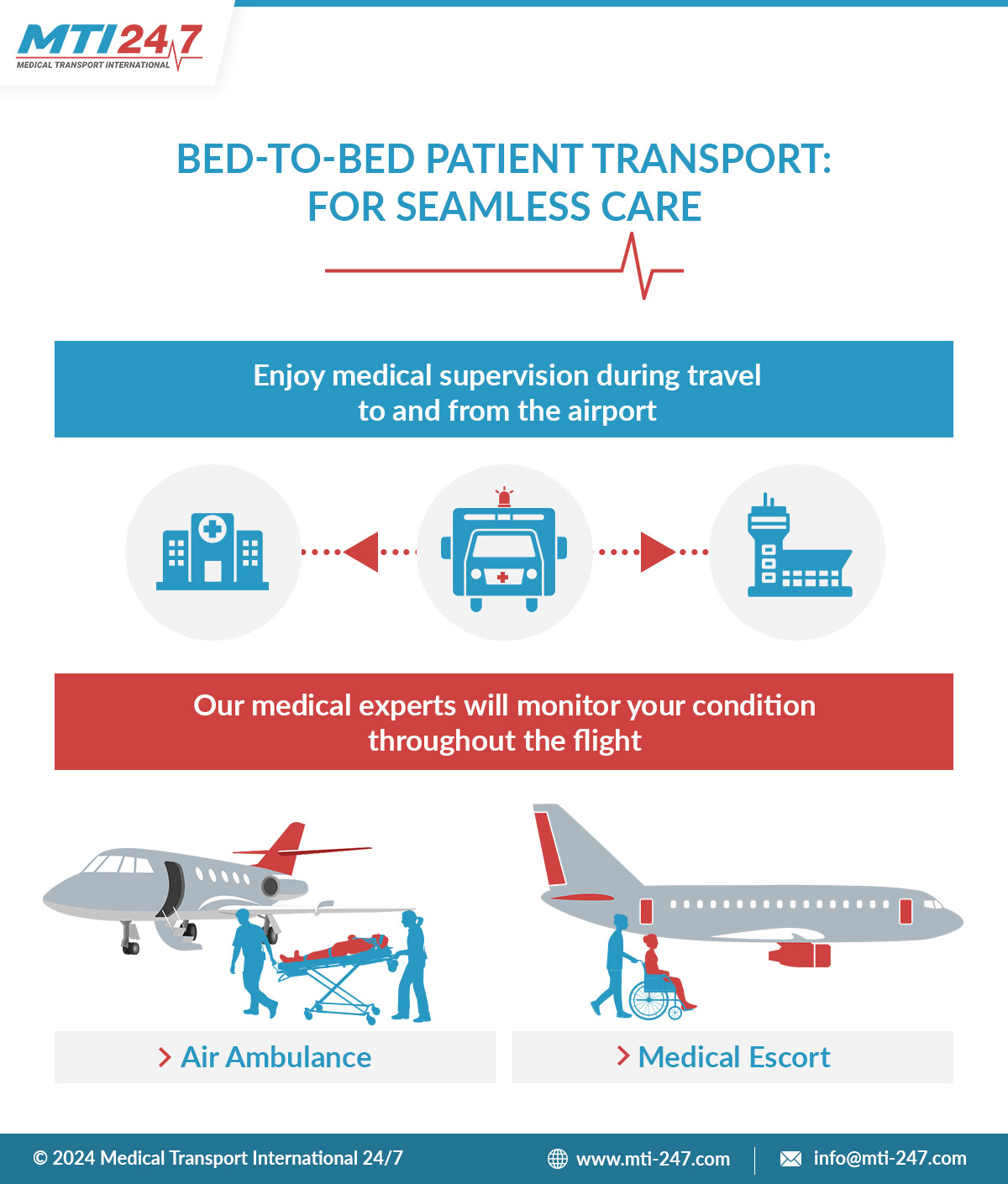
When families face a medical evacuation need, coordination becomes complex across international borders, medical requirements, and time pressures. MTI 24/7's approach ensures seamless global coordination.
Patient medical assessment: MTI 24/7's medical specialists evaluate patient condition, transport stability, and receiving facility capability to determine the most appropriate evacuation option.
Logistics and route planning: Remote locations may require helicopter pre-positioning or multi-leg planning. International evacuation requires customs coordination and landing permissions. Ground transport feasibility from patient location to airport is assessed.
Receiving facility coordination: The receiving hospital is selected and verified for bed availability, specialist accessibility, and capability to manage the patient's condition. Advance coordination ensures facilities are prepared and specialist teams are standing by.
Medical flight crew arrangement: Flight nurses, paramedics, and specialist physicians are engaged based on patient needs and briefed on medical history and anticipated complications. MTI 24/7 deploys certified medical professionals matching each patient's specific condition.
Documentation and financial clarity: MTI 24/7 handles documentation across multiple countries and languages, providing detailed mission justifications. Transparent, itemized quotes are provided upfront with no hidden costs.
24/7 global coordination: Coordination specialists work across all time zones in 16 languages with expertise across dozens of countries. Families receive real-time mission updates and direct access to coordinators managing their patient's evacuation at any hour.
Medevac prioritizes medical care and optimal facility coordination, the standard for civilian emergencies. Casevac prioritizes rapid extraction from danger, essential for tactical military situations. For international transport, complex medical needs, and cross-border coordination, professional Medevac helps maximize patient safety and clinical outcomes.
Contact us for a free consultation
If you or a family member faces a potential medical evacuation need, whether across your region, country, or internationally, MTI 24/7 coordinates comprehensive solutions with 24/7 availability, multilingual support, and proven expertise. Our specialists ensure patients reach appropriate care quickly and safely, regardless of location or medical complexity. Contact MTI 24/7 for a free consultation and transparent quote.
Reach us by:
Phone: USA: +16468635532 / UK: +442036080959
Email: info@mti-247.com
Our contact form